 Granbo Ultrasonic








Industries That Benefit From Ultrasonic Cleaning Technology
Browse Volume:45 Classify:Support
Ultrasonic cleaning machines have transformed the way professionals across dozens of sectors maintain, restore, and prepare their equipment. These devices use high-frequency sound waves to create microscopic bubbles that implode against surfaces, dislodging contaminants that manual scrubbing or spray washing cannot reach. The technology delivers consistent results while reducing labor time and chemical consumption.
The versatility of ultrasonic cleaning extends far beyond its original industrial applications. Modern systems range from compact desktop units suitable for small workshops to industrial-scale tanks processing hundreds of parts simultaneously. Understanding which industries benefit most from this technology helps businesses make informed decisions about equipment investments.
Understanding Ultrasonic Cleaning Capabilities
How Ultrasonic Cleaning Works
Ultrasonic cleaners generate sound waves between 20 kHz and 200 kHz through transducers attached to a tank containing cleaning solution. These waves create cavitation, the rapid formation and collapse of microscopic vacuum bubbles. When these bubbles implode near contaminated surfaces, they release tremendous energy that breaks the bond between dirt and the object being cleaned.
The process reaches into blind holes, crevices, and complex geometries where brushes and sprays fail. A single cleaning cycle typically lasts between three and ten minutes, depending on contamination severity. Temperature control enhances chemical activity, while adjustable frequency settings accommodate delicate or robust items.
Why Multiple Industries Adopt This Technology
Several factors drive widespread adoption across diverse sectors. Ultrasonic cleaning reduces manual labor costs while improving cleaning consistency compared to hand methods. The technology minimizes chemical usage through enhanced cleaning efficiency, addressing environmental and cost concerns. Parts emerge ready for immediate use or subsequent processing without residue that might compromise performance.
Quality control becomes more predictable when human variability is removed from the cleaning process. Industries facing strict regulatory compliance, particularly healthcare and aerospace, value the documented repeatability that automated ultrasonic systems provide. The return on investment typically materializes within 12 to 18 months for operations cleaning more than 50 parts weekly.
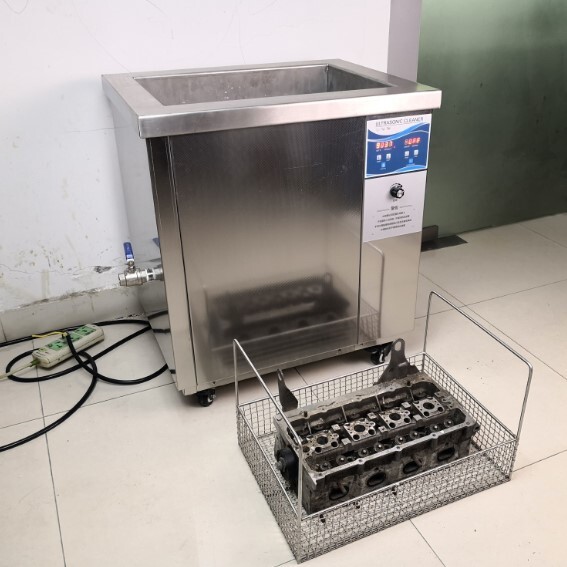
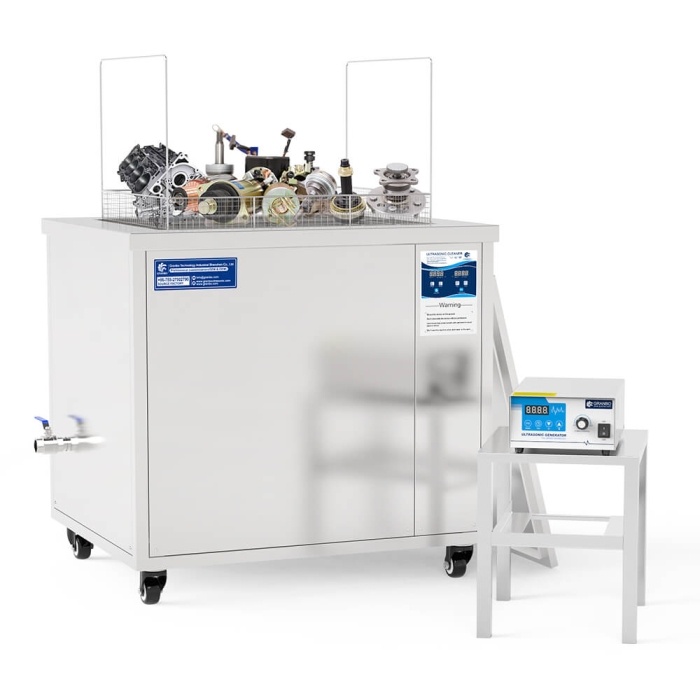
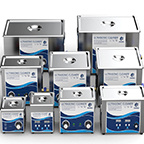
Industrial ultrasonic cleaner
Medical and Healthcare Applications
Surgical Instrument Sterilization
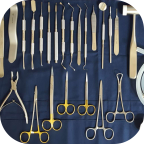
Operating room instruments undergo ultrasonic cleaning before sterilization to remove blood, tissue, and biofilm. Manual scrubbing risks damaging delicate instruments while potentially exposing staff to bloodborne pathogens. Ultrasonic systems clean scissors, forceps, retractors, and complex arthroscopic tools without physical contact.
Enzymatic cleaning solutions work synergistically with ultrasonic energy to break down protein-based contaminants. Hospitals processing hundreds of instruments daily achieve labor savings exceeding 60% compared to manual methods. The Centers for Disease Control recommends ultrasonic cleaning as part of comprehensive instrument reprocessing protocols.
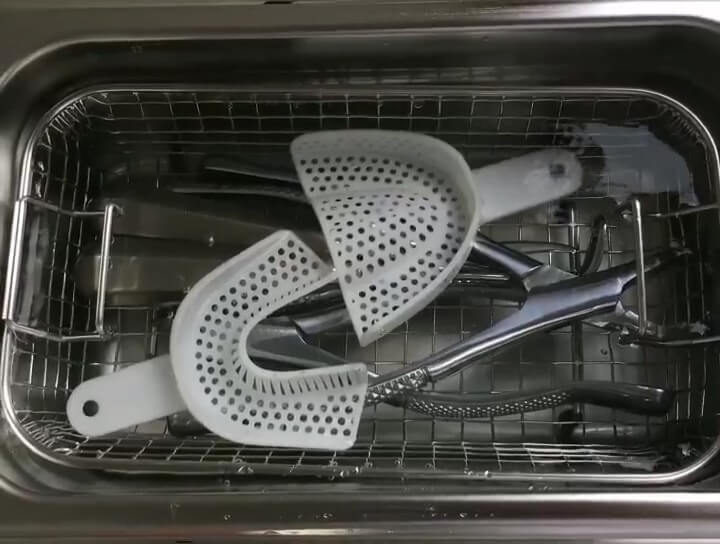
Click to View: 3.2L Dental Instruments Cleaning
Dental Equipment Maintenance
Dental practices use ultrasonic cleaners for handpieces, mirrors, scalers, and orthodontic tools. The technology removes cement, composite materials, and calculus deposits that accumulate during procedures. Ultrasonic cleaning extends instrument lifespan by preventing corrosive buildup that damages precision components.
Dental laboratories rely on ultrasonic systems to clean impression trays, bite registration materials, and prosthetic components. The process ensures proper adhesion when bonding crowns or preparing surfaces for finishing work. Compact benchtop units fit easily within standard operatory layouts.
Laboratory Glassware and Tools
Clinical laboratories maintain beakers, pipettes, test tubes, and analytical instruments through ultrasonic cleaning. Residue from previous tests can contaminate subsequent analyses, making thorough cleaning essential for accurate results. Ultrasonic systems remove stubborn deposits from ground glass joints and narrow-bore glassware that resist manual cleaning.
Microbiology labs use ultrasonic cleaners to prepare culture vessels and sampling equipment. The technology reaches surface irregularities where bacterial biofilms establish, reducing false positives in sterility testing. Research facilities processing hundreds of glass items daily reduce breakage rates by eliminating aggressive scrubbing.
Electronics and Technology Manufacturing
Circuit Board Cleaning and Flux Removal
Electronic circuit boards represent one of the most common applications for ultrasonic cleaning technology. Circuit boards with rosin flux residue that resist 10 minutes of water-based cleaning can emerge completely clean after just 3 minutes in 70% isopropyl alcohol. The difference proves dramatic, with every trace of sticky flux dissolved and removed through combined chemical and mechanical action.
No-clean flux formulations still benefit from ultrasonic cleaning before conformal coating application. Residual flux under coatings can trap moisture and cause long-term corrosion failures. Electronics manufacturers processing high-reliability products for medical, aerospace, or military applications specify ultrasonic cleaning in their quality procedures.
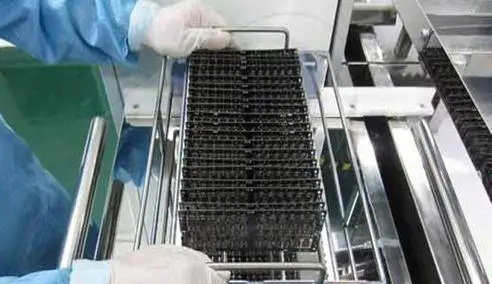
Circuit Board Cleaning and Flux Removal
Semiconductor Component Processing
Wafer fabrication facilities use specialized ultrasonic megasonic cleaners operating above 850 kHz to remove particles without damaging delicate silicon surfaces. These systems clean wafers between processing steps to prevent defects in subsequent lithography or deposition operations. Particle removal efficiency directly impacts semiconductor yield rates.
Component manufacturers clean lead frames, connectors, and IC packages before wire bonding or encapsulation. Contamination as small as 0.5 microns can cause bond failures or package delamination. Ultrasonic cleaning with precision chemical formulations achieves cleanliness levels meeting IPC and JEDEC standards.
Precision Electronics Assembly
Contract electronics manufacturers maintain stencils, squeegees, and dispensing nozzles through ultrasonic cleaning. Solder paste and adhesive residues harden quickly, reducing print quality and causing defects. Ultrasonic systems restore these tools to like-new condition in minutes rather than the hours required for manual solvent cleaning.
Rework operations use ultrasonic cleaners to prepare boards for component replacement. Removing all solder and flux residue before installing new parts prevents thermal transfer problems during reflow. The technology supports zero-defect quality initiatives in high-reliability electronics production.
Automotive and Transportation Industries
Engine Component Restoration
Automotive machine shops depend on ultrasonic cleaning for engine rebuilding operations. Cylinder heads, crankshafts, connecting rods, and valve bodies accumulate carbon deposits, varnish, and baked-on oil that resist pressure washing. Ultrasonic systems operating at 25 kHz to 40 kHz with alkaline degreasers penetrate blind passages in oil galleries and coolant channels.
Performance engine builders achieve critical cleanliness standards for racing applications where contamination causes catastrophic failures. The technology removes embedded metal particles from bearing surfaces without the abrasive damage that media blasting can inflict. Components emerge ready for precision measurement and assembly.
Fuel Injection System Maintenance
Diesel and gasoline fuel injectors require ultrasonic cleaning to restore proper spray patterns. Varnish deposits alter fuel atomization, reducing efficiency and increasing emissions. Specialized ultrasonic cleaners with heated tanks and fuel system cleaning solutions dissolve these deposits while testing injector flow rates.
Independent repair shops offer injector cleaning services using compact ultrasonic systems that process six to eight injectors per cycle. The service costs substantially less than injector replacement while delivering comparable performance restoration. Fleet maintenance operations reduce fuel consumption by 3% to 5% through regular ultrasonic injector cleaning.
Transmission Parts Cleaning
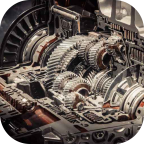
Automatic transmission rebuilders use large-capacity ultrasonic tanks to clean valve bodies, clutch drums, and planetary gear sets. Transmission fluid degradation products and friction material residues must be completely removed to prevent valve sticking and premature wear. Ultrasonic cleaning reaches the intricate passages within valve bodies that control shift timing and hydraulic pressure.
The technology prevents cross-contamination when rebuilding transmissions from different vehicles. Manual cleaning risks leaving residual contamination that causes repeat failures. Professional rebuilders document ultrasonic cleaning as part of their warranty procedures.
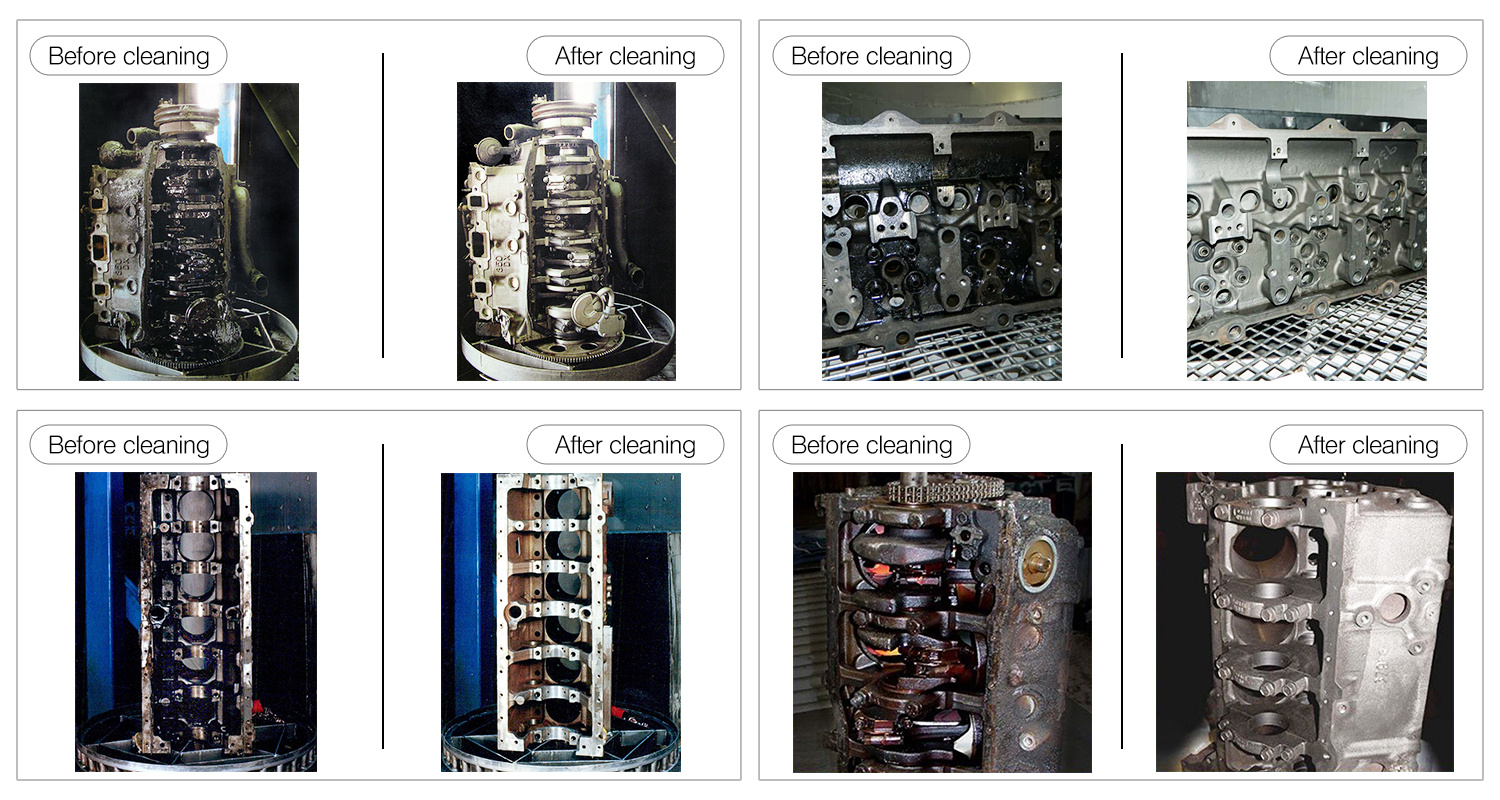
Car engine cleaning before-and-after comparison
Jewelry and Precious Metals
Fine Jewelry Restoration
Jewelers use ultrasonic cleaners daily to restore brilliance to diamond rings, necklaces, and bracelets. The technology removes skin oils, lotions, and dirt accumulated during wear without scratching precious metals or loosening stone settings. A three-minute ultrasonic cycle with ammonia-based jewelry solution delivers results that hand polishing cannot match.
Estate jewelry restoration relies on ultrasonic cleaning to remove decades of tarnish and grime from intricate filigree work and detailed engravings. The process reveals original finishes without aggressive chemical treatments that might damage aged pieces. Antique jewelry dealers use ultrasonic systems as their primary cleaning method before resale.
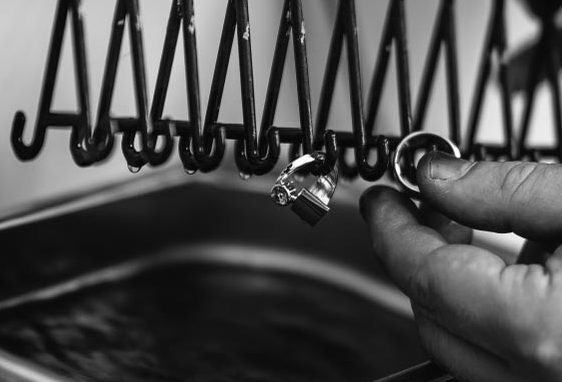
Granbo Ultrasonic Jewelry Cleaning
Watch Component Cleaning
Watchmakers depend on ultrasonic technology for movement servicing and restoration. Tiny gears, springs, and jewel bearings require absolute cleanliness for proper function and longevity. Specialized watch cleaning solutions remove old lubricants and metal particles without harming delicate components or decorative finishes.
High-frequency ultrasonic cleaners operating at 80 kHz to 120 kHz provide gentle cleaning action suitable for thin watch hands and fragile hairsprings. The technology supports the precision standards required in luxury watch service centers. Components emerge clean and dry, ready for inspection and reassembly.
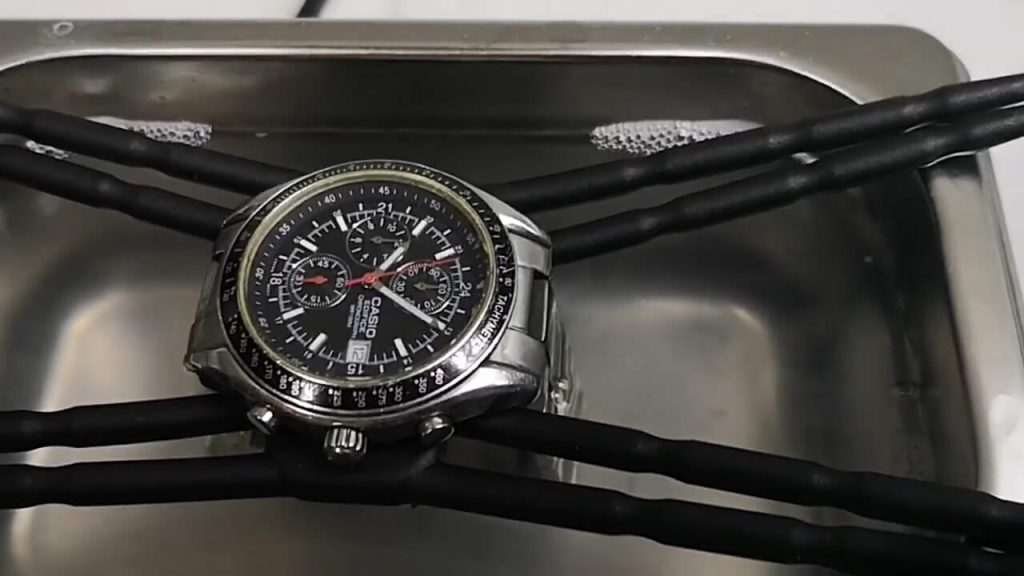
Cleaning watches with an ultrasonic cleaner
Gemstone Preparation
Lapidary artists use ultrasonic cleaners to remove polishing compound and debris from finished gemstones. The technology cleans carved cameos, faceted stones, and cabochons without damaging delicate features. Ultrasonic cleaning reveals the true color and clarity of gems before setting or sale.
Gemological laboratories prepare stones for grading and certification using ultrasonic systems. Surface contamination can mask clarity characteristics or color grades, affecting valuation. The technology ensures accurate assessment by removing all residues that might influence visual inspection.
Optical and Precision Instrument Sectors
Lens and Optical Component Care
Optical manufacturers clean precision lenses, prisms, and mirrors using ultrasonic systems with mild detergent solutions. The technology removes fingerprints, cutting oils, and polishing residues without touching delicate optical surfaces. Traditional wiping methods risk scratching coated surfaces or leaving lint that degrades optical performance.
Camera repair technicians use ultrasonic cleaners to service lens elements and mechanical components. The process removes fungus growth, lubricant migration, and dust accumulation that compromise image quality. Ultrasonic cleaning supports the exacting standards required in professional optics service.
Scientific Instrument Maintenance
Research laboratories maintain microscopes, spectrometers, and analytical instruments through ultrasonic cleaning. Sample residues, calibration solutions, and environmental contamination accumulate on sensors and optical paths, affecting measurement accuracy. Regular ultrasonic cleaning prevents drift in sensitive instruments.
Cuvettes and sample cells used in spectrophotometry require absolute cleanliness to prevent interference with optical measurements. Ultrasonic cleaning with laboratory-grade detergents removes protein films and mineral deposits that absorb or scatter light. The technology supports quality assurance in pharmaceutical and chemical analysis.
Precision Measurement Tools
Metrology laboratories clean gauge blocks, micrometers, and coordinate measuring machine probes using ultrasonic systems. Contamination as thin as 0.1 microns affects dimensional measurements at tolerances below 0.001 inches. Ultrasonic cleaning with filtered solutions maintains the cleanliness standards required for calibration and precision measurement.
Manufacturing quality control departments prepare inspection fixtures and measuring tools through ultrasonic cleaning between production runs. The technology prevents cross-contamination when measuring different materials or product families. Clean measurement tools reduce false rejections and improve process control.
Aerospace and Defense Manufacturing
Critical Component Preparation
Aerospace manufacturers adhere to stringent cleaning specifications for turbine blades, hydraulic valves, and structural fasteners. Contaminants as small as 200 microns can cause hydraulic system failures or compromise weld quality. Ultrasonic cleaning with aerospace-approved solutions meets requirements defined in standards like AMS 2644 and SAE AS5002.
Suppliers to Boeing, Airbus, and defense contractors maintain documented ultrasonic cleaning processes as part of their quality management systems. The technology provides repeatable results that satisfy customer audits and regulatory inspections. Component traceability includes cleaning parameters and solution analysis results.
Maintenance and Overhaul Operations
Aircraft maintenance facilities use industrial ultrasonic systems to clean engine components, actuators, and avionics housings during overhaul. The technology extends component service life by removing corrosion products and wear debris that accelerate deterioration. Ultrasonic cleaning reduces manual labor in maintenance operations while improving reliability.
Military depot-level maintenance depends on ultrasonic systems for weapons components, electronic assemblies, and precision mechanisms. The technology supports rapid turnaround requirements for mission-critical equipment. Documented cleaning procedures ensure consistent results across multiple maintenance facilities.
Pharmaceutical and Biotechnology
Production Equipment Sanitization
Pharmaceutical manufacturers clean mixing vessels, filling nozzles, and tablet punches using validated ultrasonic processes. The technology removes active pharmaceutical ingredients and excipients that might cause cross-contamination between product batches. Ultrasonic cleaning supports current Good Manufacturing Practice (cGMP) compliance.
Validation protocols document cleaning effectiveness through residue testing and visual inspection. Ultrasonic systems provide reproducible results that satisfy regulatory inspections by the FDA and European Medicines Agency. The technology reduces cleaning time between production runs, improving manufacturing efficiency.
Research Laboratory Applications
Biotechnology research facilities clean bioreactors, filtration systems, and chromatography columns using ultrasonic technology. Protein buildup and cell debris interfere with experimental results and equipment performance. Specialized enzymatic cleaning solutions work synergistically with ultrasonic energy to digest biological residues.
Cell culture laboratories maintain sterile technique by thoroughly cleaning reusable glass and metal components before autoclaving. Ultrasonic cleaning removes culture media and cellular material that sterilization alone cannot address. The technology supports reproducibility in biological research.
Industrial Manufacturing and Metalworking
Metal Part Degreasing
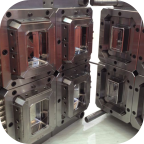
Machine shops remove cutting fluids, stamping oils, and drawing compounds from manufactured parts using ultrasonic degreasers. The technology cleans threaded holes, internal channels, and tight-tolerance surfaces where residual oils cause assembly problems or coating failures. Alkaline cleaning solutions emulsify hydrocarbon contaminants while ultrasonic energy dislodges embedded particles.
High-production manufacturing operations integrate ultrasonic cleaning into automated part handling systems. Components move directly from machining to ultrasonic cleaning to rinsing without manual intervention. The process ensures consistent cleanliness across thousands of parts daily.
Surface Preparation Before Coating
Powder coating and plating operations depend on ultrasonic cleaning to prepare metal surfaces for finishing. Inadequate cleaning causes coating adhesion failures and premature corrosion. Ultrasonic systems remove scale, rust, and machining residues that chemical cleaning alone might miss.
Anodizing facilities clean aluminum parts ultrasonically before the electrochemical coating process. Surface contamination creates defects in the anodized layer that compromise appearance and corrosion resistance. The technology supports zero-defect quality requirements in architectural and aerospace applications.
Removal of Cutting Fluids and Oils
Precision machining operations generate stubborn residues that interfere with subsequent processing. Ultrasonic cleaning removes these contaminants without harsh solvents that pose environmental and safety concerns. Water-based cleaning solutions combined with ultrasonic energy achieve cleanliness levels meeting automotive and aerospace specifications.
Bearing manufacturers clean precision races and rolling elements to remove grinding compounds and preservative oils before assembly. Contamination as small as 50 microns reduces bearing life and causes premature failure. Ultrasonic cleaning in filtered solutions maintains the cleanliness standards required for high-performance applications.
Additional Sectors Utilizing Ultrasonic Technology
Firearms and Sporting Goods
Gunsmiths and firearms enthusiasts use ultrasonic cleaners to maintain rifles, pistols, and shotguns. The technology removes carbon fouling, copper deposits, and powder residues from barrels, bolts, and trigger mechanisms. Ultrasonic cleaning reaches the gas ports and locking lugs that brushes cannot adequately clean.
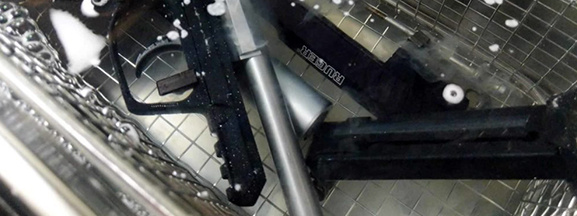
Cleaning of firearm components
Specialized firearms cleaning solutions dissolve lead and copper deposits while protecting steel and aluminum surfaces. A 10-minute ultrasonic cycle delivers cleaning results that manual methods require hours to achieve. Competitive shooters maintain accuracy through regular ultrasonic cleaning of precision match barrels.
Tattoo and Body Art Equipment
Professional tattoo artists clean needles, grips, and tubes using ultrasonic systems as part of their infection control protocols. The technology removes ink and biological residues before sterilization, supporting compliance with health department regulations. Ultrasonic cleaning reduces the risk of cross-contamination and bloodborne pathogen transmission.
Body piercing studios use ultrasonic cleaners to prepare jewelry and instruments before sterilization. The process ensures that autoclave steam can contact all surfaces for effective sterilization. Health inspectors verify that body art facilities maintain documented cleaning procedures.
Restoration and Conservation Work
Museum conservators use ultrasonic technology to clean archaeological artifacts, coins, and historical objects. The gentle cleaning action removes centuries of accumulated dirt without damaging fragile surfaces. Conservators adjust frequency, power, and solution chemistry to match the specific requirements of each item.
Art restoration specialists clean bronze sculptures, silverware, and decorative metalwork using carefully controlled ultrasonic processes. The technology removes corrosion products and old conservation treatments without affecting original patinas. Documented procedures ensure that cleaning supports preservation rather than causing irreversible damage.
Selecting the Right Ultrasonic System for Your Industry
Capacity and Size Considerations
Tank capacity must accommodate the largest items requiring cleaning while allowing adequate solution circulation. A general rule specifies that parts should occupy no more than 70% of tank volume for optimal cleaning performance. Baskets or fixtures hold parts in the ultrasonic field without blocking transducer surfaces.
Key capacity factors include:
Daily throughput requirements. Operations cleaning hundreds of small parts need different systems than those processing a few large components. Batch processing capacity affects labor efficiency and production scheduling.
Part dimensions and weight. Industrial systems feature reinforced tanks and lifting equipment for heavy components. Desktop units suit jewelry shops and small electronics repair operations.
Future growth planning. Investing in slightly larger capacity prevents outgrowing the system within two to three years. Modular systems allow capacity expansion through additional tanks.
Frequency Selection Based on Application
Lower frequencies between 25 kHz and 40 kHz provide aggressive cleaning for robust parts with heavy contamination. Higher frequencies from 80 kHz to 170 kHz suit delicate items requiring gentle action. Dual-frequency and sweep-frequency systems offer versatility for operations cleaning varied part types.
Frequency guidelines by application:
Medical instruments. 40 kHz provides effective cleaning without damaging precision surgical tools. Dental applications often use 35 kHz for general cleaning.
Electronics. 40 kHz to 80 kHz removes flux without stressing delicate solder joints or component leads. Higher frequencies suit sensitive semiconductor applications.
Automotive parts. 25 kHz to 40 kHz delivers the aggressive action needed for carbon deposits and baked-on oils. Engine components withstand the intense cavitation.
Jewelry and optics. 80 kHz to 120 kHz provides gentle cleaning that protects delicate settings and optical coatings. The finer cavitation reduces the risk of damage.
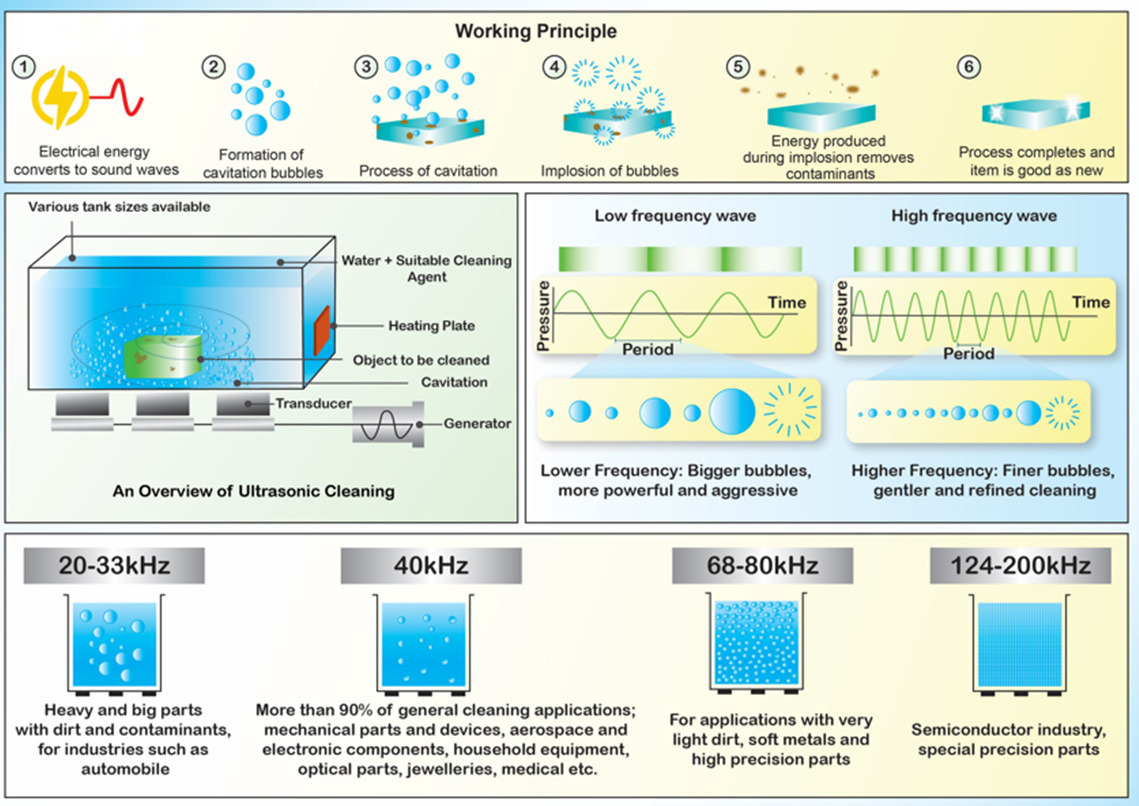
Ultrasonic Frequency Select Guide
Cleaning Solution Compatibility
Tank construction materials must resist chemical attack from cleaning solutions used in specific applications. Stainless steel tanks accommodate most aqueous cleaners, while specialized coatings protect against aggressive acids or alkalis. Solution compatibility affects long-term equipment reliability.
Material compatibility considerations:
Aqueous cleaners. Water-based detergents, degreasers, and enzymatic solutions work in standard stainless steel tanks. These formulations suit most industrial applications.
Solvent systems. Isopropyl alcohol, acetone, and specialized electronics cleaners require explosion-proof construction and vapor management systems. Fire safety codes regulate solvent ultrasonic cleaning.
Acidic or alkaline solutions. Strong chemicals may require titanium tanks or specialized coatings. Chemical compatibility charts specify safe combinations of materials and solutions.
Documented incidents of isopropyl alcohol fires in electronics repair environments highlight the dangers of ignoring safety protocols. In typical scenarios, consumer-grade ultrasonic cleaners filled with 99% alcohol and run continuously for 30 minutes in poorly ventilated spaces create hazardous vapor accumulation. Static discharge from operators reaching across units can ignite vapor clouds above tanks. Such flash fires commonly cause second-degree burns to hands and forearms, destroy ultrasonic cleaners, and damage surrounding equipment. These fires often burn out quickly when tanks aren’t completely full, though partial filling doesn’t eliminate the serious injury risk.
Professional operations using flammable solvents invest in purpose-built systems with sealed tanks, vapor condensers, and explosion-proof electrical components. Local fire codes and insurance requirements dictate safety features for solvent ultrasonic cleaning. The additional equipment cost proves worthwhile given the liability and property damage risks.
Temperature control enhances cleaning performance across all industries. Heated ultrasonic systems operating between 50°C and 70°C improve chemical activity and reduce cleaning time. Digital temperature controllers maintain consistent conditions for repeatable results. Some applications require cooling to protect temperature-sensitive components.
Investment decisions should consider total cost of ownership including solution consumption, maintenance requirements, and energy usage. Industrial systems with built-in filtration and solution management reduce operating costs compared to basic models requiring frequent solution changes. Productivity improvements and labor savings typically justify higher initial equipment costs within the first year of operation.
The diverse applications across medical, electronics, automotive, aerospace, manufacturing, and specialty sectors demonstrate ultrasonic cleaning’s fundamental role in modern quality operations. Industries continue discovering new applications as equipment capabilities advance and cleaning challenges become more demanding. Selecting appropriate systems matched to specific applications ensures optimal performance and return on investment.