 Granbo Ultrasonic






How to Choose Ultrasonic Cleaner Power and Frequency
Browse Volume:70 Classify:Support
Selecting the right ultrasonic cleaner involves more than picking the largest tank or highest price tag. The two most critical specifications, cleaning power and frequency, directly determine whether your investment delivers spotless results or disappointing outcomes. These parameters work together in complex ways, and understanding their relationship helps you match equipment capabilities to your specific cleaning challenges.
Professional buyers often focus exclusively on tank capacity while overlooking how power density and frequency selection affect cleaning quality. A jeweler restoring delicate antique pieces needs vastly different settings than an automotive shop removing carbon deposits from engine parts. The same applies to medical facilities sterilizing surgical instruments versus electronics manufacturers cleaning printed circuit boards.
Understanding Ultrasonic Cleaning Technology Basics
What Makes Ultrasonic Cleaning Effective
Ultrasonic cleaners generate high-frequency sound waves that human ears cannot detect. These waves travel through a liquid cleaning solution, typically water mixed with specialized detergents. The invisible energy creates rapid pressure changes throughout the fluid, reaching into blind holes, threads, and microscopic surface irregularities that manual scrubbing or spray washing cannot access.
The effectiveness stems from mechanical action rather than chemical aggression alone. This mechanical component means you can often use milder cleaning solutions, reducing environmental impact and material compatibility concerns. The process works equally well on horizontal surfaces, vertical walls, and upward-facing recesses, providing uniform cleaning coverage regardless of part orientation.
The Principle Behind Ultrasonic Cleaning
The Role of Cavitation in Cleaning Performance
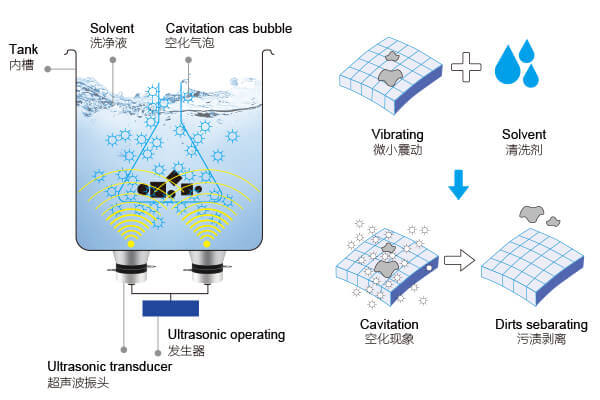
Cavitation forms the foundation of ultrasonic cleaning efficiency. When sound waves pass through liquid, they create alternating high-pressure and low-pressure cycles. During low-pressure phases, microscopic bubbles form throughout the solution. These bubbles grow over several pressure cycles until they become unstable and violently collapse during high-pressure phases.
Each bubble implosion releases concentrated energy in an extremely localized area. The collapse generates temperatures exceeding 5,000 degrees Celsius and pressures reaching thousands of atmospheres, though only for nanoseconds and within microscopic spaces. This intense but controlled violence dislodges contaminants without damaging properly selected base materials. Millions of these microscopic implosions occur simultaneously throughout the cleaning bath, creating a thorough scrubbing action that reaches every wetted surface.
Decoding Ultrasonic Cleaning Power
What Cleaning Power Actually Means
Manufacturers typically specify ultrasonic power in watts, representing the electrical energy converted into acoustic energy. A 500-watt cleaner generates more intense cavitation than a 200-watt unit, assuming similar tank volumes. However, raw wattage alone tells an incomplete story. The conversion efficiency between electrical input and actual ultrasonic output varies between generator designs and transducer quality.
Real cleaning power depends on how effectively the system converts electrical energy into mechanical vibration at the tank bottom or walls. Premium systems might achieve 70 to 80 percent conversion efficiency, while budget models may only reach 40 to 50 percent. This efficiency difference means a well-designed 300-watt cleaner can outperform a poorly engineered 500-watt unit. Reputable manufacturers provide both input power and actual ultrasonic output specifications.
Power Density and Its Impact on Results
Power density, measured in watts per liter or watts per gallon, provides more useful information than total wattage. This metric indicates how much ultrasonic energy concentrates within each unit of cleaning solution. Higher power density creates more aggressive cavitation, removing stubborn contaminants faster but potentially risking damage to delicate items.
Industry experience suggests optimal power density ranges from 50 to 100 watts per liter for general-purpose cleaning. Light-duty applications, such as eyeglass cleaning or jewelry maintenance, work well with 30 to 50 watts per liter. Heavy industrial cleaning, like removing thick grease or carbon deposits, may require 100 to 150 watts per liter. Exceeding 150 watts per liter rarely improves results and increases energy waste while generating excessive heat.
Matching Power to Tank Size
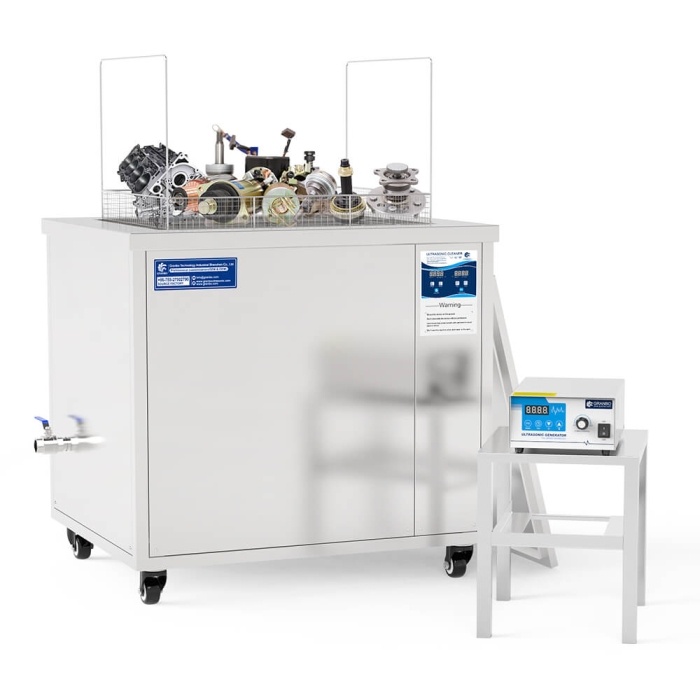
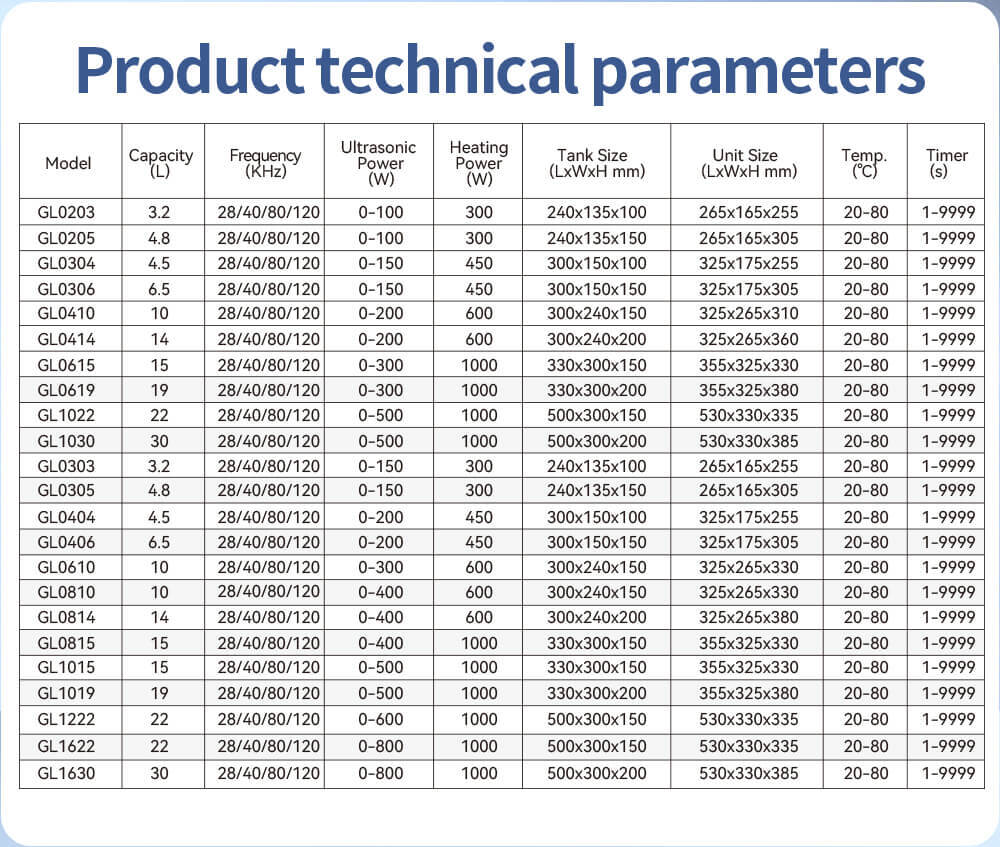
Small benchtop cleaners with capacities under two liters typically use 50 to 150 watts total power. These units suit hobbyists, small repair shops, or professional practices handling limited volumes. Mid-sized cleaners holding five to 30 liters commonly feature 200 to 600 watts, serving general commercial applications. Industrial systems with 50 to 500-liter capacities may employ 1,000 to 10,000 watts or more, often using multiple transducers to ensure even energy distribution.
Proportional scaling matters because simply increasing power without expanding tank size creates excessive cavitation intensity. This overdriving can damage both the equipment and the items being cleaned. Conversely, underpowering a large tank results in weak, ineffective cleaning in areas distant from transducers. Proper matching ensures consistent cavitation strength throughout the entire bath volume.
Understanding Ultrasonic Frequency Selection
Ultrasonic Frequency Select Guide
Low Frequency Range (20-40 kHz)
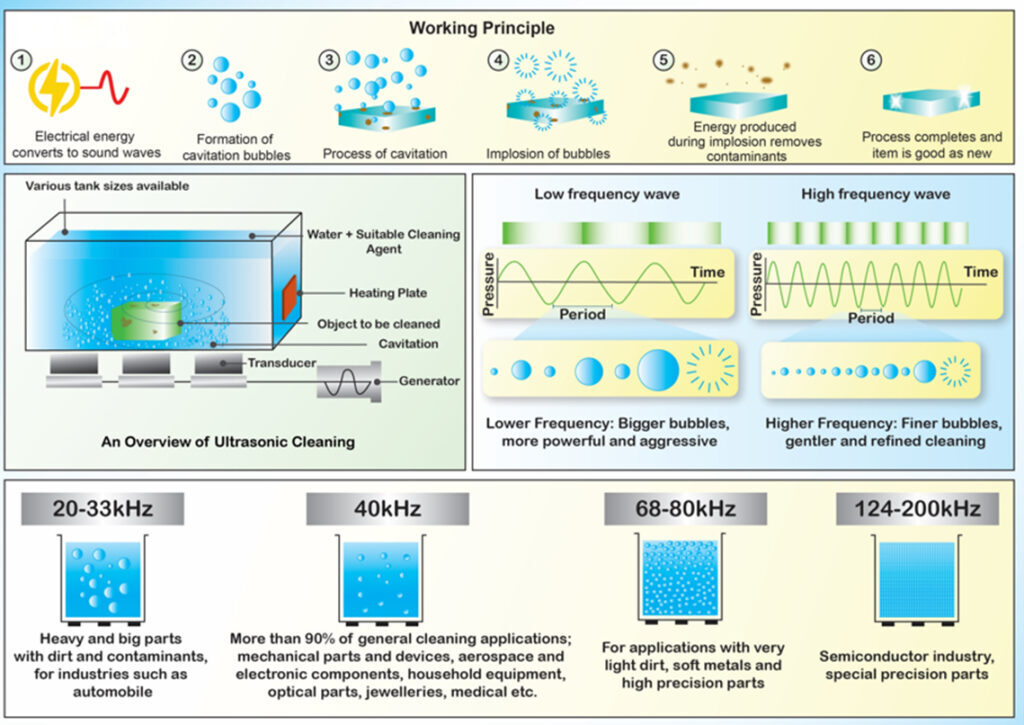
Lower frequencies generate larger cavitation bubbles that implode with greater individual force. The 25 kHz range has become popular for heavy-duty cleaning applications because these robust bubbles effectively attack thick, tenacious contaminants. The larger bubble size means fewer total bubbles per unit volume, but each collapse delivers more mechanical impact.
This frequency range excels at removing heavy oils, grease, carbon deposits, rust, and scale from durable metal parts. Automotive components, industrial machinery parts, and heavily soiled tools respond well to low-frequency cleaning. The aggressive action makes this range less suitable for delicate items, thin materials, or surfaces with loose plating or coating. Many users report audible noise at 25 kHz, though modern designs minimize this annoyance.
Medium Frequency Range (40-80 kHz)
The 40 kHz frequency represents the most common ultrasonic cleaning standard worldwide. This middle ground provides sufficient cleaning power for most general applications while remaining gentle enough for moderately delicate items. The bubble size at this frequency creates balanced performance between cleaning speed and material safety.
Medical and dental instruments, precision machined parts, laboratory glassware, and electronic components typically clean effectively at 40 kHz. The frequency produces essentially silent operation, making it suitable for office environments and customer-facing businesses. Most ultrasonic cleaning solutions and processes have been optimized for this frequency range, providing the broadest selection of compatible detergents and established cleaning procedures.
Moving toward 68 or 80 kHz further reduces cavitation intensity while improving penetration into tiny crevices. These higher medium frequencies suit optical components, delicate instruments, and items with complex internal passages. The gentler action extends cleaning time compared to lower frequencies but significantly reduces risk to vulnerable materials.
High Frequency Range (80-200 kHz)
Frequencies above 80 kHz generate extremely small cavitation bubbles that implode with minimal individual force. While each bubble carries less energy, the total number of bubbles per unit volume increases dramatically. This creates a gentler overall cleaning action that excels at removing fine particles without mechanical stress on delicate surfaces.
The 120 to 170 kHz range serves specialized applications including semiconductor wafer cleaning, precision optical polishing, medical implant preparation, and restoration of valuable artifacts. These frequencies can remove submicron particles while preserving delicate surface finishes, thin films, and fragile structures. Some high-end systems offer frequencies up to 200 kHz for ultimate gentleness in critical cleaning tasks.
High-frequency cleaning typically requires longer cycle times and may struggle with heavy, adherent contamination. The approach works best for maintaining cleanliness rather than restoring severely soiled items. Operating costs tend to be higher due to more sophisticated electronics and the need for precisely controlled cleaning solutions.
Application-Based Power Requirements
Light Cleaning Tasks
Routine maintenance cleaning, such as jewelry brightening, eyeglass washing, or removing light dust and fingerprints, needs minimal power. Settings between 30 and 60 watts per liter provide adequate performance without risk of damage. These applications typically involve items already relatively clean, where ultrasonic action mainly removes surface films and restore original appearance.
Consumer-grade ultrasonic cleaners often target this market segment, offering compact designs with fixed power settings around 50 watts per liter. Professional jewelers and opticians may choose slightly more powerful units, around 60 to 80 watts per liter, to handle occasional heavy soiling or speed up cleaning cycles during busy periods. The moderate power allows safe cleaning of gemstones, delicate metal settings, and coated lens surfaces.
Medium-Duty Cleaning Operations
Most commercial and professional ultrasonic cleaning falls into this category. Medical and dental practices removing biological residues, manufacturing facilities cleaning machined parts, and service businesses restoring customer items require balanced performance. Power density between 70 and 100 watts per liter handles these diverse needs effectively.
This power range removes dried fluids, cutting oils, polishing compounds, assembly lubricants, and similar moderate contamination types. Cleaning cycles typically run five to 15 minutes, balancing thoroughness against operational efficiency. The moderate power level accommodates a wide variety of materials, from surgical steel to aluminum, brass, and engineering plastics. Most businesses find this range suitable for 80 to 90 percent of their cleaning needs.
Heavy-Duty Industrial Cleaning
Automotive repair, metal fabrication, industrial maintenance, and similar applications often encounter severe contamination. Thick grease, baked-on carbon, rust scale, and welding residues require aggressive cleaning action. Power densities from 100 to 150 watts per liter deliver the necessary cavitation intensity to break down these stubborn materials.
Parts may require elevated solution temperatures, specialty detergents, and extended cleaning times even with high power levels. Some operations implement multiple-stage cleaning, starting with high-power aggressive action followed by medium-power fine cleaning. The robust equipment used in these applications typically features heavy-gauge stainless steel tanks, industrial-grade transducers, and powerful heating systems to maintain optimal solution temperature.
Frequency Selection for Different Materials
Delicate Items and Precision Components
Items vulnerable to mechanical stress, including thin-walled components, loose coatings, soft metals, and aged materials, benefit from higher frequencies. The 68 to 170 kHz range provides effective cleaning while minimizing impact forces. Delicate gold chains, antique jewelry, microelectronic assemblies, and precision optical elements fall into this category.
Higher frequencies penetrate better into extremely fine features like mesh screens, porous materials, and microscopic surface textures. The gentler action preserves surface finishes, preventing the dulling or etching that can occur with overly aggressive cleaning. Many restoration specialists and high-value product manufacturers consider high-frequency capabilities essential for protecting irreplaceable items.
Durable Parts and Robust Materials
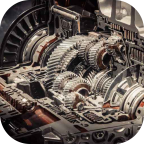
Solid metal parts, thick-walled components, and materials with substantial mechanical strength tolerate lower frequencies well. The 25 to 40 kHz range efficiently removes heavy contamination from steel, cast iron, brass, and similar durable materials. Engine components, industrial tools, pipe fittings, and construction hardware clean quickly at these frequencies.
The robust cavitation at lower frequencies reaches into deep blind holes, threads, and recesses more effectively than gentler high-frequency cleaning. Parts can withstand the mechanical stress without damage, allowing maximum cleaning intensity for minimum cycle time. This efficiency translates directly into higher throughput and lower operating costs in high-volume operations.
Complex Geometries and Hard-to-Reach Areas
Parts with intricate internal passages, intersecting holes, or nested components present special challenges. Medium to high frequencies, particularly in the 40 to 80 kHz range, excel at penetrating complex geometries. The smaller bubble size allows cavitation to occur within confined spaces that larger bubbles cannot enter.
Medical instruments with internal lumens, hydraulic valve bodies with crossing passages, and assembled components with trapped contamination require this penetrating action. Some manufacturers offer dual-frequency or sweep-frequency systems that vary the operating frequency during cleaning cycles. This variation ensures cavitation reaches every wetted surface regardless of geometric complexity.
Industry-Specific Recommendations
Medical and Dental Applications
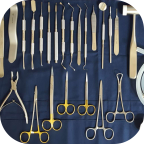
Healthcare ultrasonic cleaners must meet stringent requirements for removing biological contamination while preserving expensive instruments. The standard 40 kHz frequency combined with 80 to 100 watts per liter power density serves most needs. This combination effectively removes blood, tissue, bone fragments, and dried biofilms without damaging delicate hinges, tips, and edges.
Specialized medical applications may warrant different settings. Surgical microsurgery instruments benefit from higher frequencies around 68 to 80 kHz to protect tiny, precise features. Dental bur cleaning sometimes uses lower frequencies near 25 kHz for aggressive cutting debris removal. Many medical facilities invest in units offering selectable frequencies to handle their diverse instrument inventory efficiently.
Jewelry and Watchmaking
Professional jewelers typically choose 40 kHz cleaners with moderate power around 60 to 80 watts per liter. This setup brightens metals, removes polishing compounds, and cleans stone settings without loosening prongs or damaging delicate work. Antique jewelry restoration may require gentler 80 to 120 kHz frequencies to preserve patina and aged finishes.
Watchmakers face unique challenges cleaning assembled timepieces and small precision parts. Higher frequencies between 68 and 120 kHz protect delicate hairsprings, jeweled bearings, and decorative finishes. Lower power densities, around 50 watts per liter, prevent damage to aged lubricants in vintage movements while still removing accumulated dirt and oxidation.
Automotive and Manufacturing
Auto repair shops need robust cleaning power for heavily contaminated parts. Carburetors, fuel injectors, engine blocks, and transmission components clean effectively at 25 to 40 kHz with 100 to 120 watts per liter. The aggressive action cuts through carbon deposits, varnish, and baked-on grease that resist other cleaning methods.
Manufacturing facilities using ultrasonic cleaning for degreasing, defluxing, or removing machining fluids typically standardize on 40 kHz systems. This frequency handles the majority of production cleaning needs while maintaining compatibility with established processes. Large industrial tanks may use lower frequencies around 25 kHz for maximum contaminant removal speed.
Electronics and Circuit Boards
Circuit board assembly requires removing flux residues without damaging delicate components. The standard 40 kHz frequency combined with moderate power around 70 watts per liter removes most common solder fluxes effectively. More delicate assemblies with sensitive components may benefit from 68 or 80 kHz frequencies that reduce mechanical stress.
Semiconductor fabrication and precision electronics manufacturing often specify 80 to 170 kHz for critical cleaning steps. These applications prioritize particle removal over heavy contamination cleaning, making the gentler high-frequency approach ideal. The reduced cavitation intensity prevents damage to bond wires, tiny surface-mount components, and MEMS devices.
Balancing Power and Frequency Together
The Inverse Relationship Principle
Power and frequency interact in ways that require careful consideration. Higher frequencies generally need higher total power to achieve comparable cleaning intensity because each individual bubble carries less energy. A 40 kHz cleaner with 100 watts per liter produces similar cavitation intensity to a 120 kHz unit with 150 watts per liter, though the cleaning characteristics differ subtly.
This relationship means you cannot simply compare power specifications across different frequency ranges. A high-power, high-frequency system may clean more gently than a moderate-power, low-frequency unit. Evaluating cleaning effectiveness requires considering both parameters together rather than focusing on either specification alone.
Adjustable vs Fixed Settings
Entry-level ultrasonic cleaners typically offer fixed frequency and power settings optimized for general use. This simplicity suits operations with consistent cleaning needs and limited technical expertise. The fixed approach eliminates setup complexity and ensures repeatable results batch after batch.
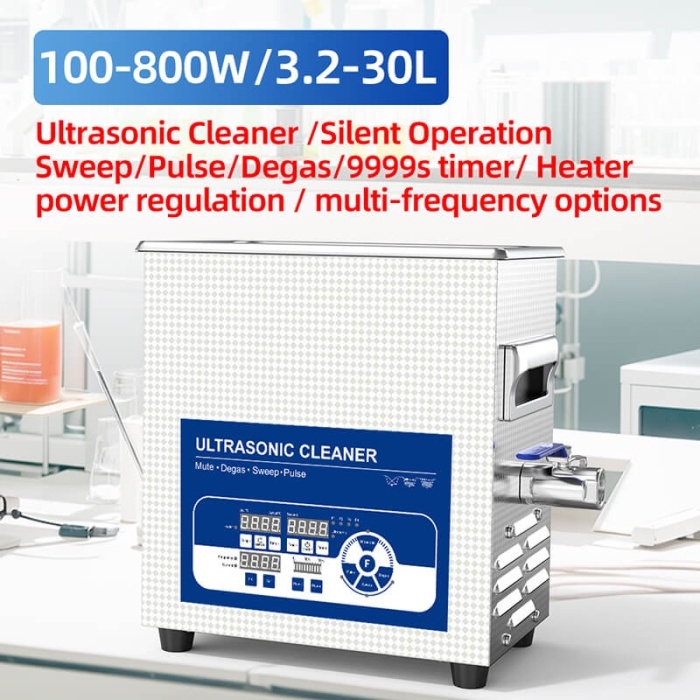
Advanced systems provide adjustable power levels and sometimes selectable frequencies. This flexibility accommodates diverse cleaning requirements within a single facility. Adjustable power allows matching intensity to each job, from gentle parts rinsing to aggressive heavy contamination removal. Dual-frequency or sweep-frequency capabilities expand the range of materials and contamination types a single unit can handle effectively.
Multi-Frequency Systems
Premium ultrasonic cleaners may offer simultaneous operation at multiple frequencies. These sophisticated systems use separate transducer arrays operating at different frequencies, creating a broad spectrum of bubble sizes. The combination provides aggressive cleaning action from lower frequencies while maintaining the penetration and gentleness of higher frequencies.
Multi-frequency technology suits facilities handling diverse workloads where investing in multiple dedicated cleaners would be impractical. Research laboratories, restoration shops, and flexible manufacturing operations benefit from this versatility. The added cost compares favorably against purchasing and maintaining several specialized units.
Common Selection Mistakes to Avoid
Overestimating Power Requirements
Many buyers assume more power always delivers better results. While adequate power is essential, excessive power wastes energy, generates unnecessary heat, and may damage delicate items. The misconception that maximum power produces fastest cleaning leads to disappointed expectations when reality proves more nuanced.
Proper power selection matches equipment capability to actual cleaning challenges. Trying to achieve the impossible, such as removing welded-on rust scale, sets up any ultrasonic cleaner for failure regardless of power level. Understanding the technology’s capabilities and limitations prevents unrealistic power specification and subsequent disappointment.
Ignoring Material Compatibility
Focusing solely on contamination type while overlooking base material characteristics causes problems. Cast aluminum removes differently than forged steel despite similar grease contamination. Soft metals like lead or pewter require gentler treatment than hardened tool steel. Coated or plated items need careful frequency selection to avoid stripping or damaging finishes.
Material science considerations should inform power and frequency selection as much as contamination severity. Consulting material compatibility charts and conducting test cleaning on sample parts prevents expensive mistakes. Some materials, including certain plastics and composites, have specific frequency sensitivities that mandate careful equipment selection.
Overlooking Long-Term Efficiency
Initial purchase price sometimes overshadows operating cost analysis. Low-cost units with poor electrical efficiency consume more power while delivering mediocre cleaning performance. The apparent savings disappear quickly when you factor in higher electricity bills, longer cleaning cycles, and potential re-cleaning needs.
Quality ultrasonic generators maintain stable output over extended periods, ensuring consistent results year after year. Budget electronics may drift out of specification, gradually reducing cleaning effectiveness. Total cost of ownership calculations that include energy consumption, maintenance requirements, and equipment lifespan reveal the true value proposition.
Testing and Validation Methods
Running Trial Cleanings
Theoretical specifications provide useful guidance, but practical testing confirms equipment suitability. Cleaning representative samples under actual operating conditions reveals whether power and frequency selections match real-world needs. This validation should occur before committing to large equipment purchases or production process changes.
Comprehensive testing evaluates cleaning effectiveness, cycle time, material compatibility, and operational convenience. Testing multiple contamination levels helps establish appropriate settings for routine cleaning versus occasional heavy soiling. Documenting results creates baseline data for future equipment comparison and process optimization.
Measuring Actual Performance
Several methods quantify ultrasonic cleaning performance objectively. Aluminum foil erosion tests reveal cavitation intensity distribution throughout the tank. Placing foil sheets at various positions and operating the cleaner briefly creates erosion patterns indicating active cavitation zones. More aggressive cavitation produces faster, more extensive foil perforation.
Standardized contamination samples provide quantitative cleaning assessment. Glass slides coated with specific test soils allow measuring removal percentage under controlled conditions. Commercial test kits with calibrated contamination provide consistent evaluation across different equipment and settings. These objective measurements support decision making better than subjective assessment alone.
Making Final Adjustments
Initial equipment selection rarely proves perfect without some refinement. Most cleaning processes benefit from systematic optimization after installation. Adjusting power levels, frequencies, solution temperature, and cycle times incrementally reveals the most effective combination for each application.
Documenting these adjustments and their effects builds institutional knowledge that improves future decisions. Many facilities establish cleaning procedure specifications that include validated power, frequency, temperature, and time parameters for each part type or contamination category they encounter regularly.
Cost Considerations and ROI Analysis
Equipment investment represents only one component of total ownership cost. Operating expenses, including electricity consumption, solution replacement, maintenance, and labor, accumulate throughout the equipment lifespan. Higher-efficiency systems with optimized power and frequency selections often justify premium pricing through reduced operating costs and improved throughput.
Calculate payback periods by comparing equipment cost against anticipated savings in labor, chemistry, and energy. Faster cleaning cycles increase throughput without adding labor hours. More effective contamination removal reduces reject rates and rework expenses. These tangible benefits usually outweigh the initial price difference between adequate equipment and optimal equipment.
Return on investment calculations should include intangible benefits like improved product quality, enhanced customer satisfaction, and reduced environmental impact. Proper power and frequency selection contributes to all these outcomes by enabling efficient, effective cleaning that meets requirements without excess resource consumption. The best ultrasonic cleaner for your operation balances initial cost against comprehensive lifetime value.
Professional operations justify their equipment investments through measurable improvements in cleaning quality, operational efficiency, and cost savings. The time invested in understanding power and frequency selection pays dividends through years of reliable, effective cleaning performance. This technical knowledge separates successful ultrasonic cleaning operations from those struggling with disappointing results and frustrated operators.
The intersection of power and frequency creates countless possible combinations, but systematic analysis narrows the field to a manageable set of viable options. Understanding your specific cleaning challenges, material characteristics, and operational constraints guides you toward the optimal balance. This informed approach transforms ultrasonic cleaning from a mysterious process into a reliable, predictable manufacturing or maintenance tool.