 Granbo Ultrasonic








How to Choose the Right Ultrasonic Cleaner: Selection Guide and Price Factors
Browse Volume:38 Classify:Support
Selecting appropriate ultrasonic cleaning equipment requires balancing technical specifications against application requirements and budget constraints. Market options range from compact benchtop units priced under $100 to industrial systems exceeding $50,000. Understanding which features deliver value for specific applications and which factors drive pricing helps buyers make informed purchasing decisions.
The ultrasonic cleaner market spans diverse applications including jewelry cleaning, medical instrument reprocessing, automotive parts restoration, electronics manufacturing, and laboratory equipment maintenance. Each application demands different performance characteristics. A jeweler requires gentle high-frequency cleaning preserving delicate settings, while an automotive shop needs robust low-frequency power removing heavy grease and carbon deposits.
Price variations across seemingly similar models often reflect fundamental differences in construction quality, component selection, and performance capabilities. Recognizing these distinctions prevents purchasing underpowered equipment requiring premature replacement or overbuying excessive capacity that remains underutilized. Technical specifications provide objective comparison metrics when properly interpreted.
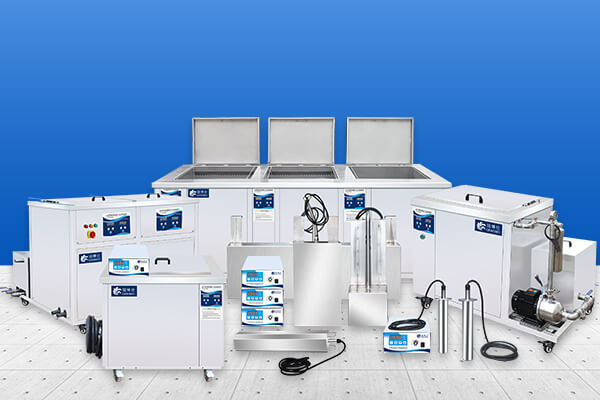
Ultrasonic Cleaning Equipment
Understanding Your Cleaning Requirements
Application analysis forms the foundation for equipment selection. Identifying what items require cleaning, their contamination types, material composition, and required cleanliness standards narrows suitable options. Medical instruments demand different specifications than automotive parts despite both benefiting from ultrasonic cleaning.
Contamination type determines necessary cleaning intensity and solution chemistry. Light oils, dust, and polishing compounds require less aggressive cleaning than baked-on carbon, rust, or heavy greases. Organic contamination including proteins and blood responds to enzymatic cleaning solutions, while mineral deposits and oxidation require acidic or alkaline formulations. Equipment must accommodate appropriate solution chemistry without degrading.
Item complexity influences frequency selection and tank configuration. Simple flat surfaces clean effectively across frequency ranges, while complex geometries with blind holes, threads, and intricate details benefit from specific frequency optimization. Parts requiring assembly disassembly before cleaning need larger tank capacity than fully immersible items.
Material sensitivity restricts applicable ultrasonic parameters. Delicate optical coatings, soft metals like aluminum, and certain plastics require gentler cleaning action than stainless steel or ceramics. Operating frequency and power intensity must match material tolerance thresholds preventing damage.
Throughput demands determine tank size, cycle time requirements, and whether manual or automated systems provide better value. High-volume operations justify larger initial investments in industrial equipment offering efficiency advantages. Lower volume applications benefit from flexible benchtop units with lower capital costs.
Cleanliness standards establish whether basic cleaning suffices or validated reprocessing protocols apply. Medical device reprocessing, pharmaceutical manufacturing, and aerospace component cleaning operate under regulatory requirements affecting equipment specifications, documentation, and validation capabilities.
Tank Size and Capacity Considerations
Tank capacity directly impacts equipment pricing, with larger tanks requiring proportionally more power and structural support. Selecting appropriate size balances processing capacity against available space and budget. Undersized tanks force batch splitting and repeated cycles reducing efficiency, while oversized tanks waste energy heating and processing excess solution.
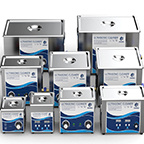
Compact ultrasonic cleaners with 0.5 to 3-liter capacity suit jewelry, eyeglasses, dental appliances, and small electronic components. These units occupy minimal counter space and operate from standard electrical outlets. Pricing typically ranges from $80 to $500 depending on construction quality and features. The small solution volume enables frequent changes maintaining cleaning effectiveness.
Mid-range capacity from 3 to 10 liters accommodates medical instrument trays, larger automotive parts, and small batch production cleaning. These units serve dental offices, small medical clinics, repair shops, and laboratories. Pricing ranges from $400 to $2,500 reflecting increased structural requirements and power delivery. Benchtop or floor-standing configurations provide installation flexibility.
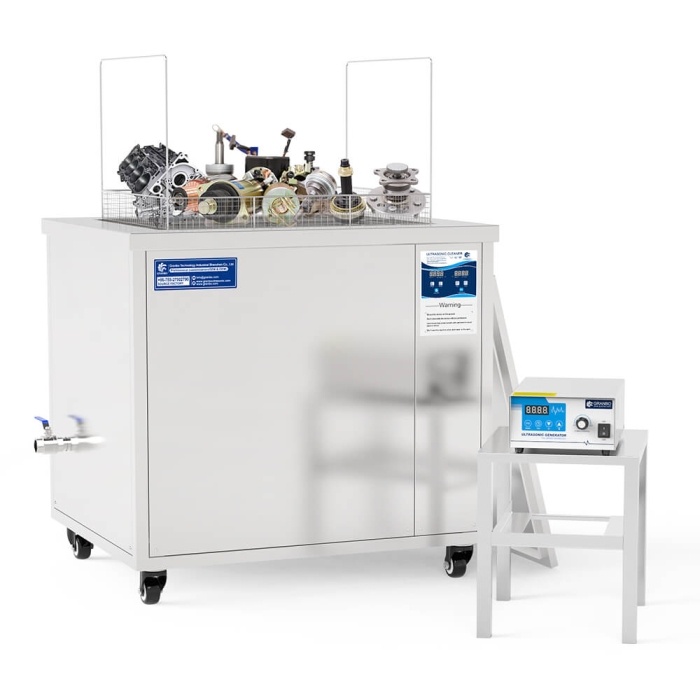
Large industrial tanks from 10 to 100+ liters handle bulk cleaning, large automotive components, and manufacturing production lines. These systems require dedicated installation space, drainage connections, and potentially specialized electrical service. Pricing spans $2,000 to $50,000+ based on capacity, automation level, and process integration features.
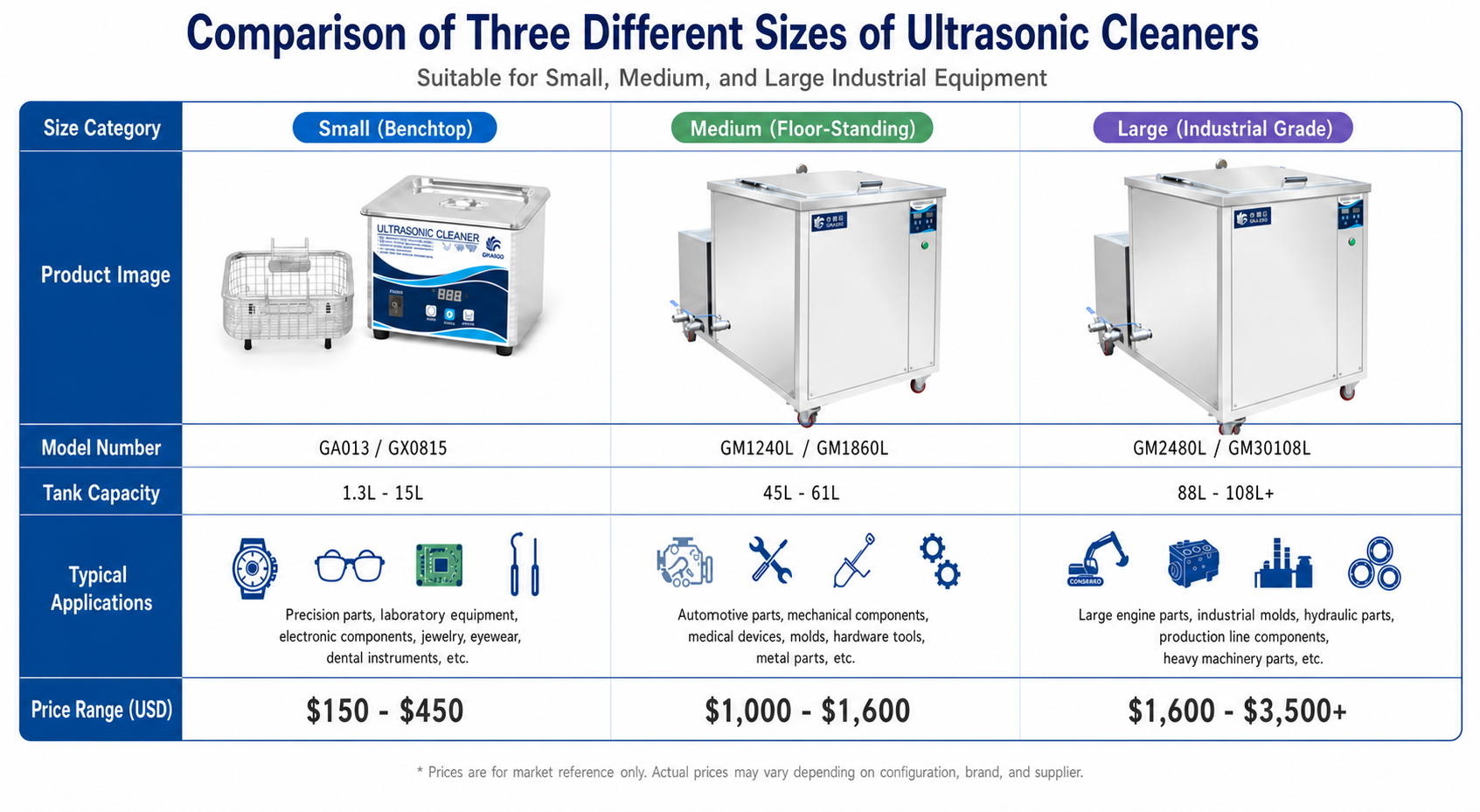
Comparison chart showing three ultrasonic cleaner sizes side by side with tank capacity, typical applications, and price ranges labeled for small, medium, and large industrial units
Beyond total volume, internal tank dimensions must accommodate cleaned items with adequate clearance. Parts should suspend in solution without touching tank walls or bottom where direct contact with vibrating surfaces may cause damage. Basket dimensions typically provide 1-2 inches clearance ensuring proper ultrasonic field exposure.
Frequency Selection for Different Applications
Operating frequency fundamentally affects cleaning characteristics and price points. Different frequencies produce varying cavitation bubble sizes and collapse intensities creating distinct cleaning actions. Matching frequency to application optimizes results and prevents equipment underperformance or damage.
Low Frequency Applications (25-40 kHz)
Lower frequencies generate larger cavitation bubbles producing more aggressive cleaning action. The increased mechanical force excels at removing heavy contamination including carbon deposits, casting residue, rust, and thick greases. Industrial maintenance, automotive parts restoration, and metal fabrication benefit from low-frequency cleaning power.
The aggressive action makes low-frequency units less suitable for delicate items including soft metals, plated surfaces, and precision optical components. Risk of surface erosion or damage increases with contamination removal intensity. However, heavily soiled items requiring maximum cleaning power justify this specification.
Low-frequency industrial units typically cost $1,500 to $10,000 depending on capacity. The robust construction necessary for higher amplitude vibration contributes to elevated pricing compared to equivalent capacity high-frequency units.
High Frequency Applications (40-80 kHz)
Higher frequencies produce smaller cavitation bubbles with gentler cleaning action ideal for delicate parts and precision cleaning. Jewelry, optics, electronics, medical instruments, and aerospace components benefit from high-frequency processing. The finer bubble size improves penetration into microscopic surface irregularities achieving superior cleaning in complex geometries.
Reduced cleaning intensity compared to low frequencies limits effectiveness against heavy contamination. Parts with thick grease, carbon, or rust may require pre-cleaning or extended cycle times. However, the gentle action prevents damage to sensitive surfaces, thin-walled components, and precision finishes.
High-frequency equipment pricing ranges from $300 for small benchtop units to $15,000 for large industrial systems. Advanced multi-transducer configurations and precision control systems contribute to premium pricing in professional applications.
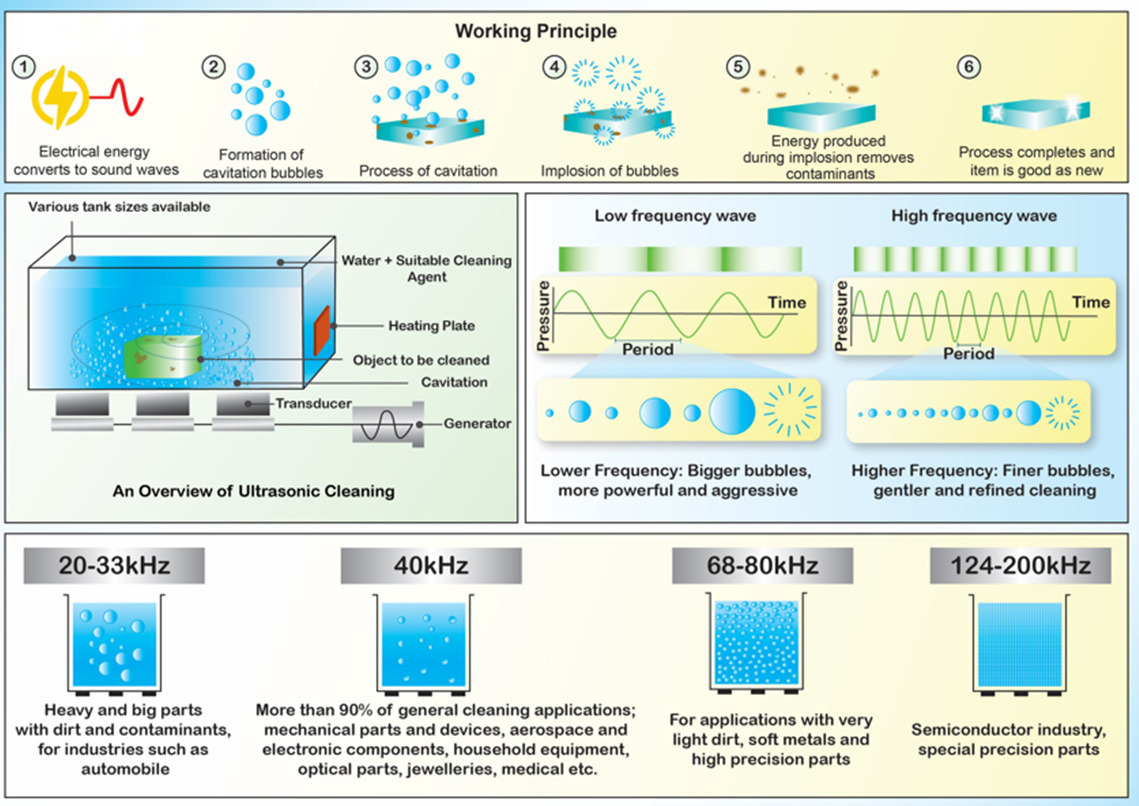
Ultrasonic Frequency Select Guide
Dual and Multi-Frequency Systems
Advanced ultrasonic cleaners incorporate multiple frequencies allowing operators to select optimal cleaning action for different parts. Dual-frequency models typically offer 25/45 kHz or 40/80 kHz combinations. Some industrial systems provide three or more frequency options covering the full application spectrum.
Frequency selection flexibility eliminates needing multiple dedicated units when processing diverse part types. A medical device reprocessing department might use low frequency for robust surgical instruments and high frequency for delicate endoscopes. The versatility justifies higher initial costs through improved utilization.
Multi-frequency systems cost 30-60% more than equivalent single-frequency models. Pricing for dual-frequency benchtop units starts around $800, while industrial multi-frequency systems range from $5,000 to $30,000. The added complexity requires sophisticated generator design and transducer configurations accounting for price premiums.
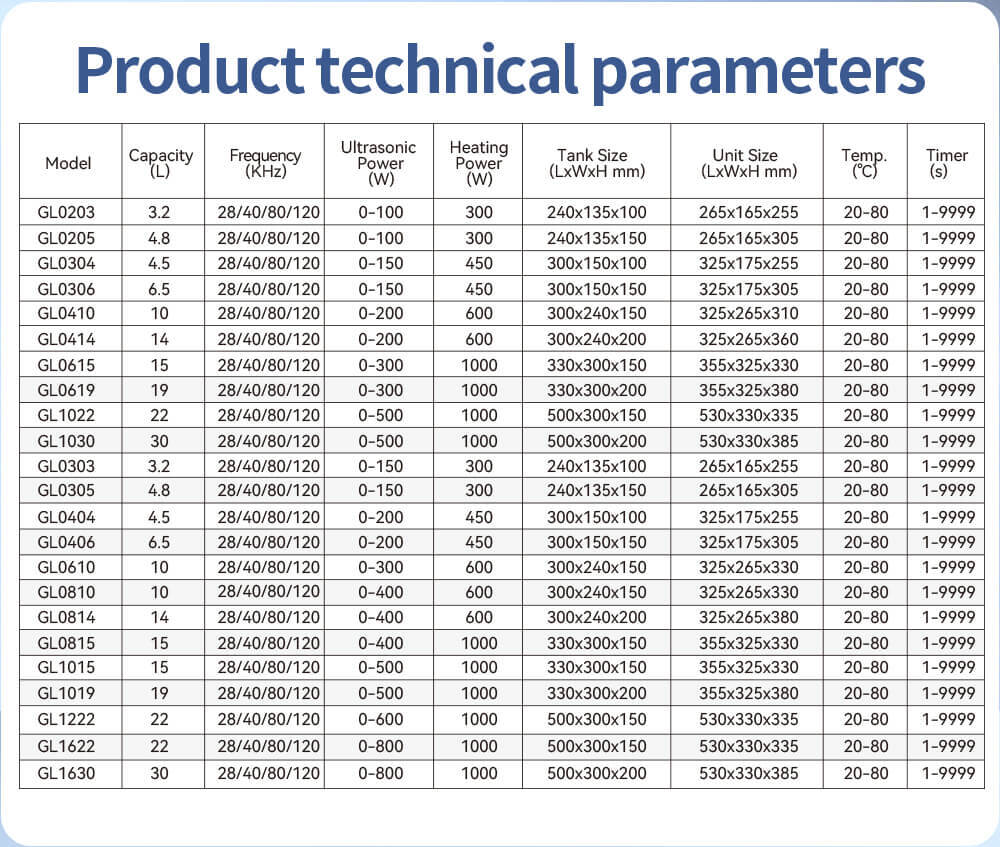
Power Density and Cleaning Intensity
Power density measured in watts per gallon or watts per liter determines cavitation field intensity and cleaning effectiveness. Insufficient power produces weak cavitation unable to remove contamination effectively. Excessive power wastes energy and may damage delicate parts.
Light cleaning applications including dust removal, fingerprint cleaning, and routine maintenance require 40-60 watts per gallon. Jewelry cleaning, eyeglass maintenance, and electronics flux removal fall into this category. Lower power reduces equipment costs with small benchtop units in the $100-400 range providing adequate performance.
Medium intensity cleaning for general manufacturing, medical instruments, and automotive parts requires 60-100 watts per gallon. Most professional applications fall into this range balancing cleaning effectiveness with part safety. Equipment pricing spans $400 to $5,000 depending on capacity and construction quality.
Heavy-duty industrial cleaning demands 100-150+ watts per gallon for removing thick oils, carbon deposits, and stubborn contamination. Industrial degreasing, engine component restoration, and heavy manufacturing applications require maximum power. Robust construction withstanding continuous operation increases equipment costs from $3,000 to $20,000+.
Generator quality significantly impacts power delivery effectiveness. Inexpensive units may claim high wattage but deliver inconsistent power with poor cavitation uniformity. Professional equipment maintains stable power output across varying load conditions ensuring repeatable cleaning results. This quality difference justifies price premiums in production environments requiring process reliability.
Construction Materials and Durability
Tank construction materials affect durability, chemical compatibility, and pricing. Material selection must withstand cleaning solution chemistry, operating temperatures, and mechanical stresses from continuous cavitation.
Stainless steel tanks provide excellent durability, corrosion resistance, and cleaning solution compatibility. Type 304 stainless suits most applications, while Type 316 offers superior corrosion resistance for aggressive chemicals. Stainless construction increases costs by 40-100% compared to other materials but delivers longer service life and better performance.
Plastic tanks made from polypropylene or other chemical-resistant polymers reduce costs in smaller units. These materials suit aqueous cleaning solutions but may degrade with certain solvents. Plastic construction limits maximum operating temperatures to 60-70°C compared to 80-90°C for stainless steel. Budget benchtop units under $200 commonly use plastic tanks.
Aluminum tanks offer cost savings over stainless steel while maintaining reasonable durability. However, alkaline cleaning solutions attack aluminum causing tank degradation. Limited chemical compatibility restricts applications. Some manufacturers use aluminum tanks with protective coatings, but coating damage leads to corrosion.
External housing construction affects durability and appearance. Industrial units feature heavy-gauge stainless steel housings withstanding harsh environments. Consumer units use lighter materials or plastics reducing costs but limiting durability. Professional users should prioritize robust construction even at higher initial cost given equipment lifespan expectations.
Heating Systems and Temperature Control
Integrated heating accelerates cleaning by reducing solution viscosity and enhancing chemical activity. Temperature control maintains optimal cleaning conditions throughout operation. Heating capability significantly impacts equipment pricing but provides valuable performance benefits.
Unheated models rely on cavitation-generated heat and ambient temperature. Small tanks heat passively during operation, but temperature control remains limited. These basic units cost less but require longer cycle times and deliver inconsistent results when processing temperature-sensitive cleaning tasks.
Basic heating with adjustable thermostats provides temperature control typically from ambient to 70-80°C. Heating elements integrated into tank construction supply controlled heat maintaining set temperatures. This feature adds $100-500 to equipment cost depending on capacity and control precision.
Advanced temperature control with digital readouts, PID controllers, and precision regulation maintains temperatures within ±1-2°C. Laboratory and production applications requiring validated cleaning processes benefit from precise temperature control. The sophisticated electronics increase costs by $300-1,000 but ensure process repeatability.
Heating power requirements scale with tank capacity. Small 2-liter tanks need 200-300 watts for reasonable heat-up times, while 30-liter industrial units require 1,500-3,000 watts. Higher heating power increases both equipment cost and electrical service requirements.
Timer and Control Features
Control systems range from simple mechanical timers to sophisticated programmable controllers with multiple parameters. Feature complexity directly correlates with pricing but delivers operational benefits in production environments.
Mechanical timers using spring-wound or basic electric mechanisms provide simple on/off control with preset cycle times. These basic controls cost minimal amounts and suit applications requiring manual operation without process documentation. Pricing remains under $300 for small units with mechanical controls.
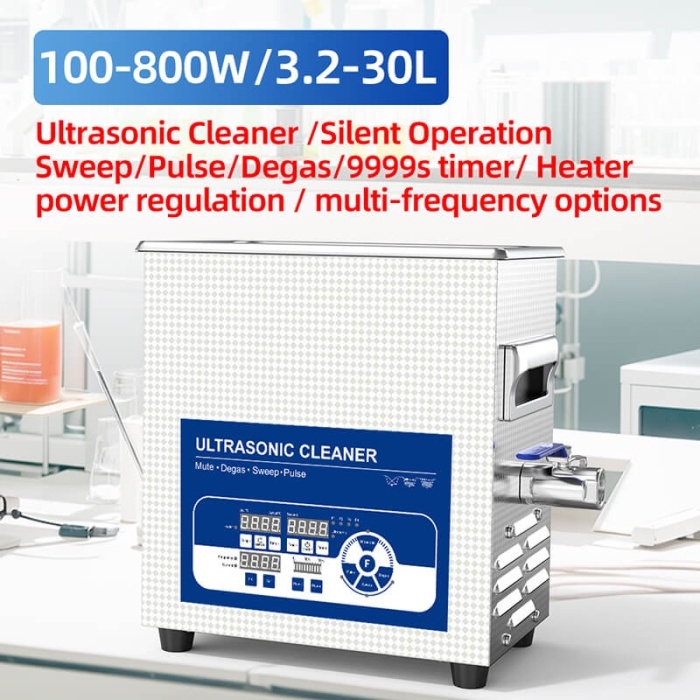
Digital timers with LED or LCD displays offer improved accuracy and cycle time flexibility. Programming capabilities allow storing multiple recipes for different cleaning tasks. Digital control adds $50-200 to equipment cost while improving operational convenience.
Programmable controllers enable complex cleaning cycles with variable power, temperature ramping, and multi-stage processing. Recipe storage facilitates repeatable validated processes for regulated industries. Touchscreen interfaces simplify operation and provide data logging capabilities. Advanced control systems increase equipment costs by $500-3,000 depending on sophistication.
Automation integration through PLC interfaces, industrial communication protocols (Modbus, Profibus), and process monitoring enables integration into automated production lines. These industrial features support lights-out manufacturing and quality system integration. Full automation capability adds $2,000-10,000 to equipment pricing but delivers labor savings and process consistency in high-volume applications.
Transducer Configuration and Quality
Transducers convert electrical energy into mechanical vibrations generating ultrasonic waves. Transducer quantity, type, and mounting configuration dramatically affect cleaning performance and equipment pricing.
Bottom-mounted transducers represent standard configuration in most ultrasonic cleaners. These piezoelectric elements bond to tank bottom transmitting vibrations through the cleaning solution. Entry-level units use 1-3 transducers providing basic coverage. Professional equipment employs 4-12+ transducers depending on tank size ensuring uniform cavitation fields.
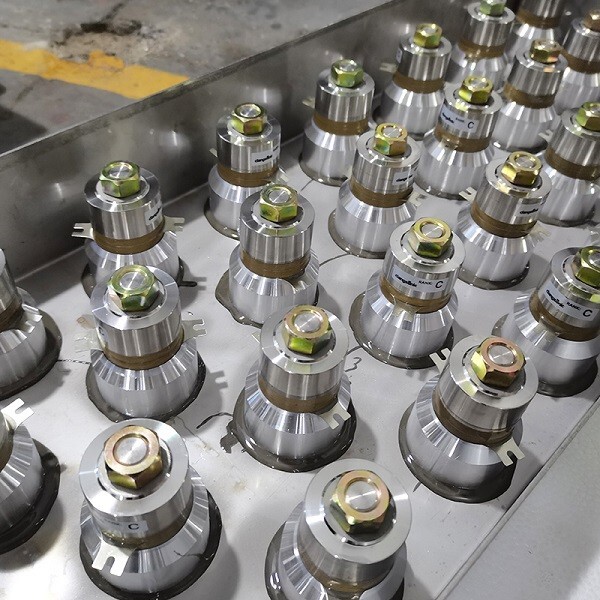
Bottom-mounted transducers
Side-mounted and multi-directional transducers improve cavitation uniformity by generating ultrasonic waves from multiple angles. This configuration reduces dead zones where parts receive inadequate exposure. Industrial systems incorporate transducers on tank bottom and sides creating three-dimensional cavitation fields. The additional transducers and complex mounting increase costs by 50-150%.
Transducer quality varies significantly across price points. Industrial-grade piezoelectric elements maintain specifications over millions of cycles and resist thermal degradation. Consumer-grade transducers use lower-quality materials experiencing faster performance decline. A quality industrial transducer costs $100-500 compared to $10-30 for basic consumer equivalents.
Sweep frequency technology varies ultrasonic frequency slightly around the nominal value preventing standing wave formation and dead zones. This feature improves cleaning uniformity particularly in larger tanks. Sweep generators add complexity increasing equipment costs by $200-800 but deliver measurable performance improvements.
Transducer bonding methods affect reliability and lifespan. High-quality epoxy bonding or brazing creates durable connections withstanding thermal cycling and mechanical stress. Poor bonding leads to transducer detachment and failure. Manufacturing quality differences here significantly impact long-term reliability justifying price premiums for established brands.
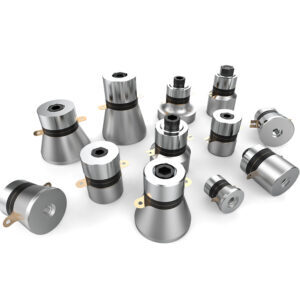
Granbo ultrasonic cleaner transducer
Industrial vs. Consumer Grade Equipment
Distinct performance and durability differences separate consumer and industrial ultrasonic cleaners despite apparent similarity. Understanding these differences prevents purchasing inappropriate equipment for intended applications.
Consumer-grade units prioritize low cost over longevity and performance consistency. Manufacturing techniques use lighter materials, fewer transducers, and basic electronics. These units suit occasional home use, hobbyists, and low-volume applications where equipment operates less than 2-3 hours weekly. Pricing ranges from $50 to $500 with expected service lives of 1-3 years under light use.
Professional-grade equipment balances performance and cost for small businesses, dental offices, jewelry stores, and repair shops. Construction quality exceeds consumer units while maintaining moderate pricing. These systems handle daily use totaling 10-20 hours weekly with expected 5-7 year service lives. Professional units cost $300 to $3,000 depending on capacity and features.
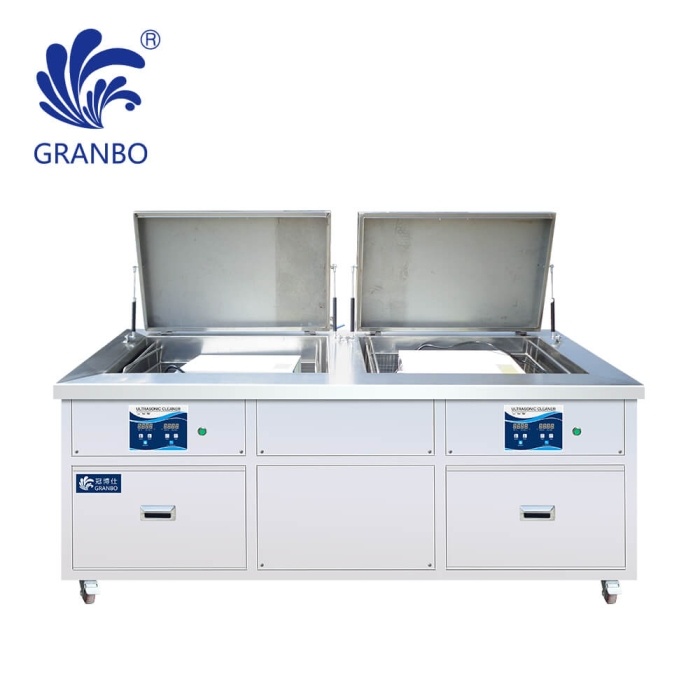
Industrial-grade systems prioritize reliability, performance consistency, and longevity for manufacturing environments and medical facilities. Continuous-duty ratings support 8-24 hour daily operation. Robust construction, quality components, and comprehensive warranties reflect intended service lives exceeding 10 years. Industrial equipment pricing starts at $2,000 and extends beyond $50,000 for large production systems.
Duty cycle ratings provide objective comparison metrics. Consumer units typically rate for 10-15 minutes on, 5-10 minutes off. Professional equipment handles 50-75% duty cycles. Industrial systems operate continuously without limitations. Operating equipment beyond rated duty cycles accelerates wear and causes premature failure.
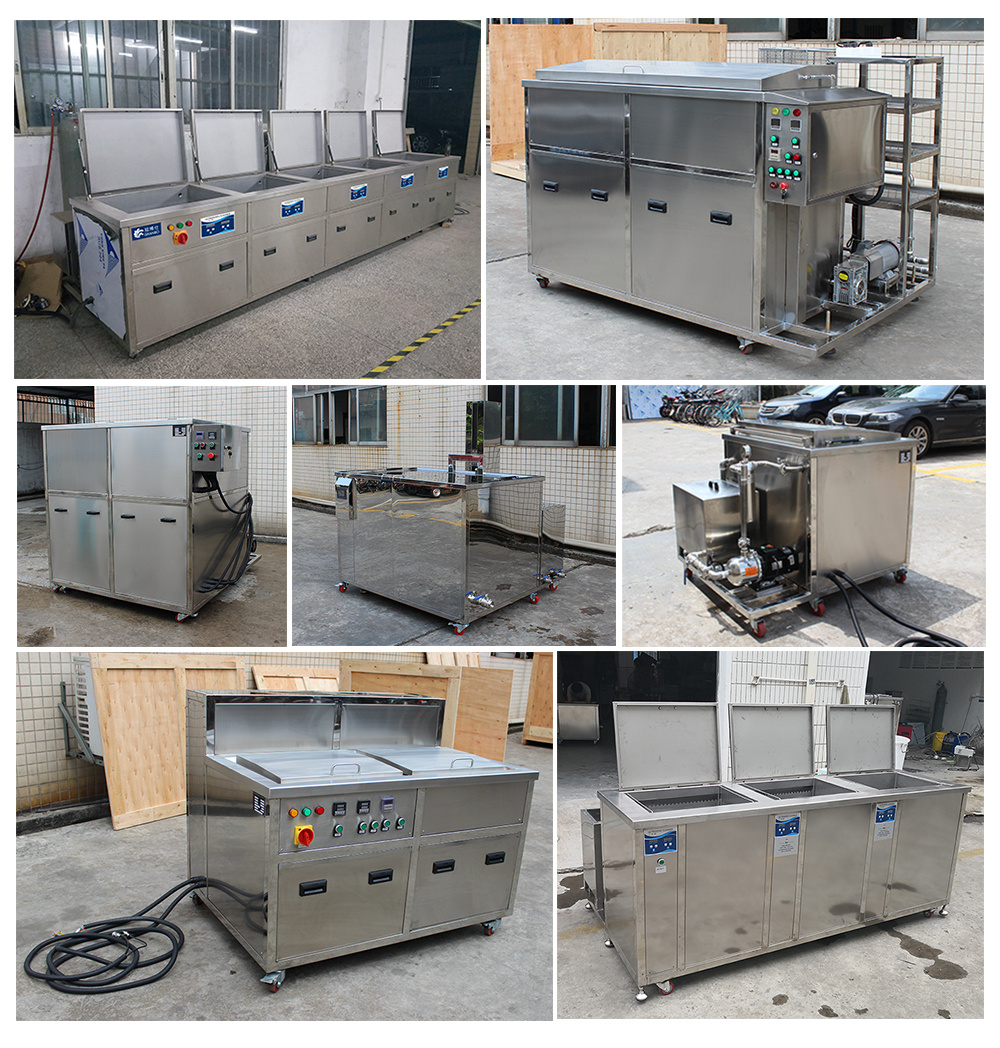
Granbo Industrial Ultrasonic Cleaning Equipment
Primary Price Factors in Ultrasonic Cleaners
Manufacturing Quality and Component Selection
Component quality directly impacts equipment longevity and performance consistency. Budget manufacturers source lowest-cost components meeting minimum functionality. Premium brands specify industrial-grade parts with proven reliability records.
Generator circuitry varies from basic oscillator designs costing under $50 to sophisticated digital frequency synthesizers and power management systems costing $500-2,000. Quality generators maintain stable output under varying loads, protect against fault conditions, and deliver years of reliable operation.
Transducer selection represents critical quality differentiator. Industrial piezoelectric elements use high-purity ceramics with precise mechanical properties. Consumer transducers employ lower-grade materials showing higher failure rates and performance degradation. A professional ultrasonic cleaner using 6 quality transducers at $300 each contains $1,800 in transducer costs alone versus $120 for consumer equivalents.
Control electronics, heating elements, and structural components follow similar patterns. Quality materials and manufacturing processes increase costs but deliver superior reliability. Repair and replacement costs for failed budget equipment often exceed the price difference for quality equipment over typical service lives.
Tank Size and Material Construction
Tank fabrication costs scale non-linearly with capacity. Material costs increase proportionally, but forming, welding, and finishing operations for larger tanks require specialized equipment and skilled labor. A 3-liter tank might cost $40 to manufacture while a 30-liter tank costs $300-500, representing a 7-12x increase for 10x capacity.
Stainless steel material selection adds 40-100% to tank costs compared to plastic or aluminum. However, stainless steel provides chemical compatibility, temperature resistance, and longevity justifying the premium in professional applications. Type 316 stainless costs 30-50% more than Type 304 but offers superior corrosion resistance for harsh chemicals.
Tank finishing affects both performance and cost. Electropolished interiors reduce particle adhesion and facilitate cleaning but add $50-200 to manufacturing costs. Basic mill-finish stainless saves money but accumulates contamination requiring more frequent maintenance.
Generator Power and Transducer Count
Power generation capacity represents major cost driver in ultrasonic equipment. Low-power consumer units with 50-100 watt generators cost $30-80 to manufacture. Industrial generators delivering 500-2,000 watts with sophisticated control and protection systems cost $300-1,500.
Transducer quantity scales with tank size and desired power density. Small 2-liter tanks function adequately with 1-2 transducers. Professional 10-liter units require 4-8 transducers for uniform coverage. Industrial 50-liter systems employ 16-32 transducers. At $100-300 per quality transducer, component costs alone justify significant price differences.
Multi-frequency systems require complex generator designs switching between frequency ranges or operating multiple transducer arrays simultaneously. The engineering complexity and component costs add 30-60% to equivalent single-frequency equipment pricing.
Advanced Features and Automation
Basic ultrasonic cleaners with mechanical controls and no heating cost $100-400 for typical 3-6 liter capacity. Adding integrated heating increases prices by $100-300. Digital controls add another $50-150. Programmable recipes and data logging capabilities contribute $200-500.
Automation features including automated basket lifts, solution filtration, multi-stage processing, and drying systems add $1,000-10,000 depending on sophistication. These features reduce labor costs and improve process consistency, justifying investment in high-volume production environments.
Safety features including solution level monitoring, overheat protection, and emergency stops represent standard requirements in industrial equipment adding $100-500 to costs. Consumer units often omit these protections minimizing price but increasing safety risks.
Additional Cost Considerations
Beyond base equipment price, total ownership costs include accessories, consumables, and operational expenses. Budget planning should account for these ongoing requirements.
Baskets and fixtures hold parts during cleaning preventing direct contact with tank walls. Quality stainless steel baskets cost $30-300 depending on size and design complexity. Specialized fixtures for specific part geometries add $100-1,000 per fixture. Budget $200-500 for adequate basket selection with new equipment.
Cleaning solutions represent ongoing consumables. Concentrated formulations cost $15-80 per gallon depending on chemistry. Solution life spans multiple cleaning cycles but requires periodic replacement as contamination accumulates. Annual solution costs range from $100 for light use to $2,000+ for high-volume operations.
Electrical consumption varies with equipment power ratings and usage patterns. Small 150-watt units operating 1 hour daily consume approximately 55 kWh annually costing $5-10. Industrial 2,000-watt systems running 8 hours daily consume over 5,800 kWh yearly costing $600-1,200 at typical commercial rates.
Maintenance requirements differ dramatically across quality tiers. Consumer equipment often proves uneconomical to repair when failures occur. Professional units support component replacement with parts availability. Industrial systems include maintenance schedules and replacement part programs ensuring long-term supportability.
Installation costs for industrial systems include electrical service upgrades, plumbing connections, ventilation modifications, and potentially structural reinforcement. These hidden costs add $500-5,000 to total project expenses depending on facility requirements.
Application-Specific Requirements
Certain applications demand specialized features affecting equipment selection and pricing. Regulatory compliance, process validation, and quality documentation requirements drive specifications beyond basic cleaning performance.
Medical device reprocessing requires validated cleaning processes with documented performance. Equipment must support temperature monitoring, cycle documentation, and regular performance verification testing. Medical-grade ultrasonic cleaners cost 40-80% more than equivalent general-purpose units due to validation support, documentation, and regulatory compliance features.
Pharmaceutical manufacturing operates under cGMP regulations demanding equipment qualification, cleaning validation, and change control procedures. Ultrasonic cleaners for pharmaceutical applications include features supporting these requirements plus materials certification and cleanroom compatibility. Pharmaceutical-grade equipment costs 2-3x equivalent industrial models.
Aerospace component cleaning must meet stringent cleanliness specifications and traceability requirements. Process documentation, residue testing, and quality system integration necessitate equipment features beyond basic cleaning capability. Aerospace-qualified systems command 50-100% price premiums.
Electronics manufacturing requires precision cleaning removing flux residues without damaging sensitive components. High-frequency operation, gentle cleaning modes, and precise process control justify specialized equipment costing 30-60% more than general industrial cleaners.
Understanding application-specific requirements prevents purchasing inadequate equipment requiring costly upgrades or replacement. Consulting with application specialists during selection ensures chosen equipment meets regulatory and performance requirements.
Common Selection Mistakes to Avoid
Purchasing decisions based solely on price often result in inadequate performance or premature replacement. Several common mistakes lead to dissatisfaction and additional expenses.
Undersizing capacity forces batch splitting and repeated cycles reducing efficiency. Small tank price savings disappear through wasted labor and time. Selecting capacity accommodating largest typical items plus 20-30% excess prevents this limitation.
Insufficient power produces weak cavitation unable to remove contamination effectively. Saving $200-500 on lower-powered equipment results in poor cleaning requiring manual intervention defeating automation benefits. Verify power density meets application requirements.
Ignoring duty cycle ratings leads to premature failure when consumer equipment operates in commercial environments. Operating equipment beyond rated duty cycles voids warranties and accelerates component wear. Match duty cycle ratings to actual usage patterns.
Neglecting frequency requirements causes disappointment when inappropriate frequencies fail to clean specific contamination or damage delicate parts. Low frequencies damage soft materials while high frequencies prove ineffective against heavy contamination. Proper frequency selection for primary applications ensures satisfactory results.
Overlooking solution compatibility damages equipment when cleaning chemistry attacks tank materials or seals. Verify material compatibility with intended cleaning solutions preventing costly damage or equipment replacement.
Buying excessive capacity wastes money on unused capability. Commercial buyers sometimes purchase industrial equipment exceeding actual requirements. Right-sizing equipment to realistic needs optimizes value without sacrificing performance.
Matching Specifications to Budget
Balancing performance requirements against budget constraints requires prioritizing essential features while accepting compromises in less critical areas.
Budget under $300 limits options to small consumer-grade units suitable for jewelry, eyeglasses, and hobby use. Prioritize stainless steel tanks and adequate capacity over advanced features. Units in this range suit personal use and very light commercial applications.
Budget $300-1,000 accesses professional benchtop equipment with heated tanks, digital controls, and improved durability. This range suits small businesses, dental offices, and laboratories with moderate cleaning requirements. Focus on appropriate capacity and frequency for primary applications.
Budget $1,000-3,000 provides quality professional equipment with multi-frequency capability, programmable controls, and robust construction. This range handles most small to medium commercial applications including medical clinics, manufacturing shops, and service businesses. Invest in features supporting primary business needs.
Budget $3,000-10,000 accesses industrial equipment with substantial capacity, advanced features, and continuous-duty ratings. Production manufacturing, large medical facilities, and high-volume operations benefit from equipment in this range. Prioritize reliability and long-term supportability.
Budget over $10,000 enables large industrial systems with automation, process integration, and specialized capabilities. High-volume manufacturing, pharmaceutical production, and aerospace applications justify these investments through productivity gains and regulatory compliance.
Equipment selection balances immediate budget limitations against long-term value and capability requirements. Purchasing quality equipment meeting actual needs delivers better value than either overbuying excessive capability or underbuying inadequate performance. Technical specifications provide objective comparison criteria when properly understood. Price variations reflect genuine differences in construction quality, component selection, and performance capabilities. Buyers benefit from researching application requirements, comparing specifications across multiple suppliers, and consulting with technical specialists ensuring selected equipment delivers reliable performance matching specific cleaning needs within budget parameters. Proper equipment selection maximizes cleaning effectiveness while optimizing total cost of ownership through the entire service life