 Granbo Ultrasonic










What Types of Jewelry Can Be Cleaned with an Ultrasonic Cleaner? Complete Material Compatibility Guide
Browse Volume:43 Classify:Support
Ultrasonic cleaners work effectively on jewelry made from durable precious metals and hard gemstones, including gold, platinum, diamonds, rubies, and sapphires. However, many materials prove incompatible, particularly pearls, opals, emeralds, and items with glued components. Understanding material properties and construction methods determines which pieces can withstand ultrasonic processing without damage.
The distinction between safe and unsafe jewelry depends on hardness, internal structure, and assembly techniques rather than value alone. Expensive antique pieces may prove unsuitable despite their worth, while modest modern jewelry often processes safely. Gemstone hardness, metal density, setting quality, and bonding methods all influence compatibility more than price.
Ultrasonic cleaning excels at removing contamination from areas manual methods cannot reach. Skin oils, cosmetics, and dirt accumulate under settings, within chain links, and in decorative details. Cavitation action penetrates these spaces, restoring brilliance impossible to achieve with cloths or brushes alone.
How Ultrasonic Cleaning Works
Understanding the cleaning mechanism helps predict which materials tolerate the process.
The Principle Behind Ultrasonic Cleaning
Cavitation Process
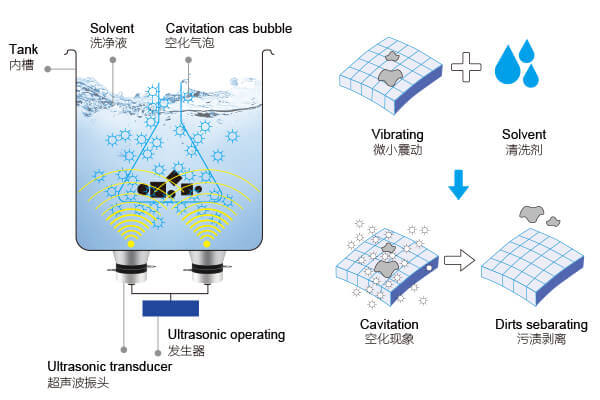
Ultrasonic transducers generate high-frequency sound waves through cleaning solution, creating millions of microscopic bubbles. These bubbles form during low-pressure phases and collapse violently during high-pressure cycles. Each collapse releases concentrated energy, producing micro-jets traveling at several hundred meters per second that dislodge contamination.
Dense materials like solid gold or platinum absorb cavitation energy without damage. Their molecular bonding strength far exceeds forces from individual bubble collapses. Hard surfaces resist microscopic abrasion, preventing cumulative damage through repeated cycles.
Materials with internal weaknesses, fractures, or low hardness respond differently. Natural inclusions, existing cracks, or layered structures can propagate under repetitive stress. Soft materials experience accelerated wear from both cavitation forces and suspended particles moving through solution.

Ultrasonic Cavitation
Frequency and Power Considerations
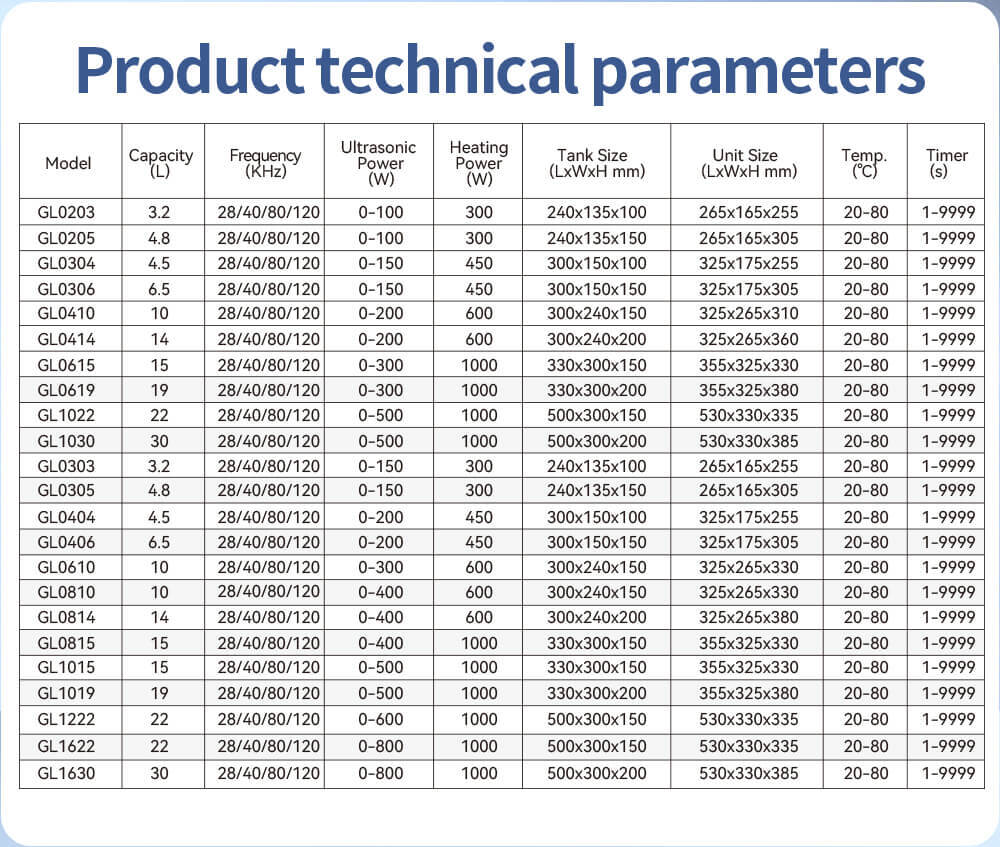
Most ultrasonic jewelry cleaners operate at around 40 kHz, a frequency that provides an effective balance between cleaning performance and material safety. Some compact household models designed specifically for jewelry use higher frequencies around 68 kHz, producing gentler cavitation that is better suited for delicate settings and fine details.
Professional jewelers often use ultrasonic cleaners with adjustable frequency and power settings. These systems may operate across a broad range, typically from 25 to 120 kHz, allowing cleaning parameters to be matched to specific jewelry materials, gemstone characteristics, and contamination levels.
Precious metals such as gold, platinum, and silver generally tolerate ultrasonic cleaning across this frequency range. In most cases, frequency selection is based on the jewelry’s design, gemstone sensitivity, and cleaning requirements rather than protection of the metal itself.
Metals Safe for Ultrasonic Cleaning
Most precious metals demonstrate excellent compatibility across all processing conditions.
Gold and Gold Alloys
Gold from 10 karat through 24 karat withstands ultrasonic cleaning without damage. The metal’s chemical stability, corrosion resistance, and ductility create ideal characteristics. Even pure 24 karat gold’s softness does not create vulnerability, as forces remain insufficient to cause deformation.
All gold alloys including yellow, white, and rose gold process safely. Alloying elements add hardness while maintaining compatibility. Gold-plated jewelry depends on base metal characteristics and plating quality. Well-adhered plating over durable metals survives processing, though repeated cleaning gradually reduces thickness.
Hollow gold construction tolerates ultrasonic cleaning despite thinner walls. The main concern involves trapped solution entering through seams. Thorough drying after processing prevents moisture retention issues.
Platinum, Palladium, and Silver
Platinum represents the ideal candidate due to exceptional density, hardness, and chemical inertness. Platinum jewelry withstands unlimited cycles without degradation. Platinum alloys maintain these properties while adding improved hardness.
Palladium demonstrates similar characteristics despite lower density. Its hardness and corrosion resistance create comparable durability. Palladium alloys used in jewelry maintain full compatibility.
Pure silver and sterling silver clean effectively when solution chemistry suits the metal. Softness does not create vulnerability, as cavitation forces remain well below deformation thresholds. Sterling’s 92.5% silver composition provides adequate hardness.
Silver-plated items follow gold-plating guidelines. Quality depends on plating adhesion and base metal properties. Oxidized finishes require caution, as ultrasonic action may remove intentional patina.
Stainless Steel and Titanium
Stainless steel demonstrates exceptional compatibility due to hardness, corrosion resistance, and stability. Surgical and 316L grades common in jewelry withstand unlimited processing.
Titanium shares these superior characteristics. Its strength and biocompatibility make it popular for body jewelry. Anodized finishes generally survive cleaning, though aggressive processing may gradually reduce color intensity.
Gemstones That Can Be Cleaned in an Ultrasonic Cleaner
Gemstone compatibility depends primarily on hardness, structure, and inclusion characteristics.
sapphire
Diamonds
Diamonds represent the most compatible gemstones as the hardest natural material. Their crystalline carbon structure withstands cavitation without chipping, fracturing, or surface damage. All qualities from flawless to heavily included process safely, though stones with visible surface-reaching fractures warrant caution.
Natural diamonds, lab-grown diamonds, and cubic zirconia all tolerate ultrasonic cleaning. The action proves particularly beneficial for diamonds, as contamination films dramatically reduce their brilliance and fire.
Settings require more attention than stones. Gemstones withstand cavitation, but settings must hold securely against vibration. Good prongs retain diamonds safely, while worn prongs might allow movement or loss.
Rubies and Sapphires
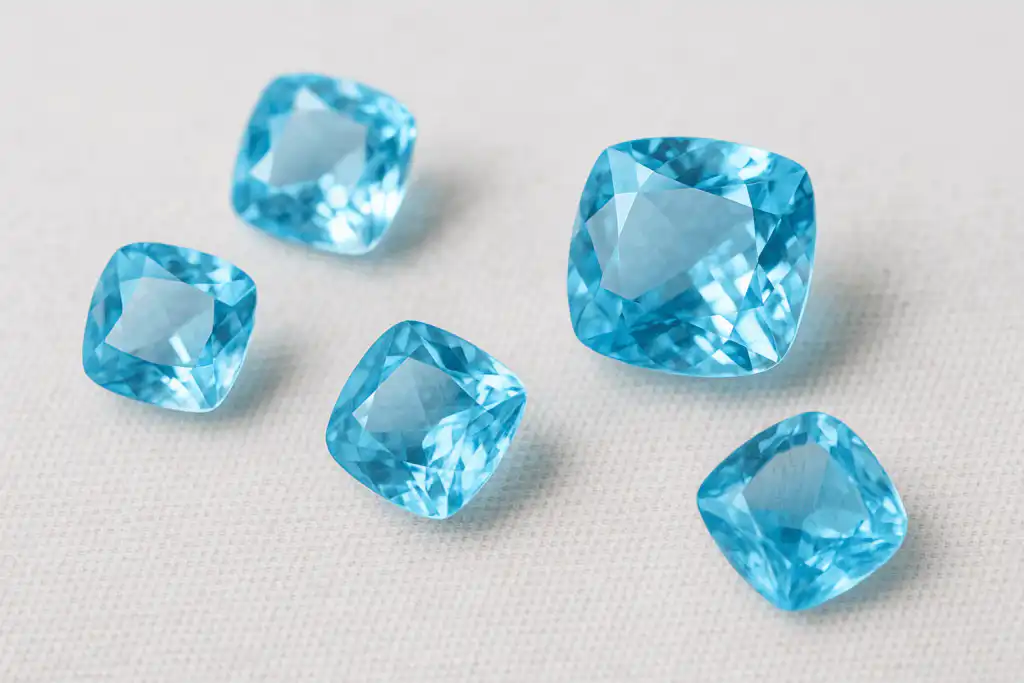
Natural rubies and sapphires rank second to diamonds in hardness at 9 on the Mohs scale. Exceptional hardness combined with excellent toughness makes corundum ideal for ultrasonic cleaning. The crystalline structure resists mechanical stress while maintaining complete chemical stability.
Unheated stones demonstrate perfect compatibility. Heat-treated specimens, representing most commercial material, generally clean safely since treatment creates permanent changes. Fracture-filled or clarity-enhanced stones require different handling, as filling materials may dislodge.
Synthetic corundum possesses identical physical properties to natural stones, ensuring equivalent compatibility. Star rubies and sapphires clean safely, as included rutile needles remain stable during processing.
Hard Gemstones (Topaz, Aquamarine, Spinel)
Topaz at hardness 8 tolerates ultrasonic cleaning in most cases. However, perfect cleavage in one direction means stones with existing fractures parallel to cleavage planes might extend cracks.
Aquamarine generally withstands processing safely. Hardness of 7.5 to 8 provides scratch resistance, while typically lower inclusion levels reduce fracture risks compared to emerald despite both being beryl.
Spinel demonstrates excellent characteristics comparable to corundum. Both natural and synthetic spinel process safely across all typical parameters.
Garnet varieties generally prove compatible, with hardness between 6.5 and 7.5 and typically good toughness. Individual stones with significant inclusions warrant inspection.
Quartz varieties including amethyst and citrine at hardness 7 usually survive without problems. Heavily included specimens or those showing existing fractures require caution.
Gemstones to Avoid
Certain materials demonstrate consistent incompatibility regardless of processing care.
Emerald Gemstone Jewelry
Emeralds
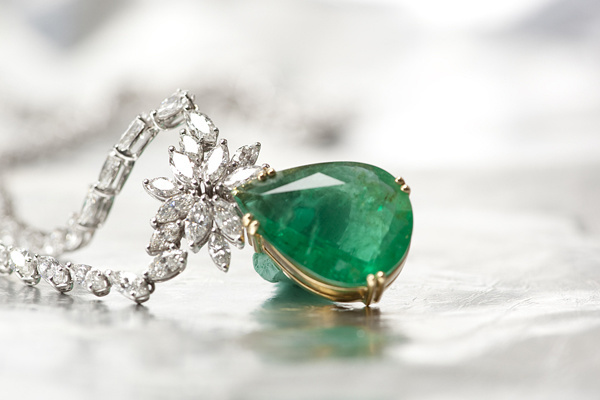
Emeralds rank among the most problematic gemstones despite hardness of 7.5 to 8. Most natural emeralds contain characteristic inclusions and internal fractures creating weakness planes that propagate under cavitation stress.
Traditional oiling to improve clarity adds complications. Oil or resin filling fractures can dislodge during cleaning, leaving stones appearing more included afterward. Even exceptionally clean emeralds benefit from alternative methods due to inherent brittleness.
Jewelers universally recommend against ultrasonic processing for emerald jewelry.
Opals and Pearls
Opals contain significant water within their silica structure, making them exceptionally vulnerable. Cavitation can drive solution into porous structure while removing natural moisture, causing crazing, loss of color play, or structural failure. Doublet and triplet opals face additional vulnerability through adhesive bond failure.
Pearls must never undergo ultrasonic cleaning. Nacre layers consist of aragonite platelets bonded with organic proteins. Cavitation disrupts this delicate structure, damaging luster and potentially cracking layers. The organic nature also creates sensitivity to cleaning solutions.
Coral, amber, and jet represent other organic materials completely incompatible with ultrasonic processing. They lack crystalline structure and hardness necessary to withstand cavitation.
Porous Stones (Turquoise, Lapis)
Turquoise demonstrates high porosity creating multiple incompatibilities. Porous structure allows solution penetration, potentially introducing contaminants deep into material. Cavitation can enlarge pores or create surface disruption. Stabilization treatment does not render turquoise ultrasonic-compatible.
Lapis lazuli’s composite nature with lazurite, calcite, and pyrite creates variable tolerance. Softer calcite components may erode preferentially, while pyrite inclusions can loosen during processing.
Malachite and azurite combine softness with layered structure vulnerable to cavitation. Material cleaves easily along layer boundaries.
Materials and Mounting Style Factors
Material compatibility alone does not determine safety. Construction methods significantly influence outcomes.
Setting Security
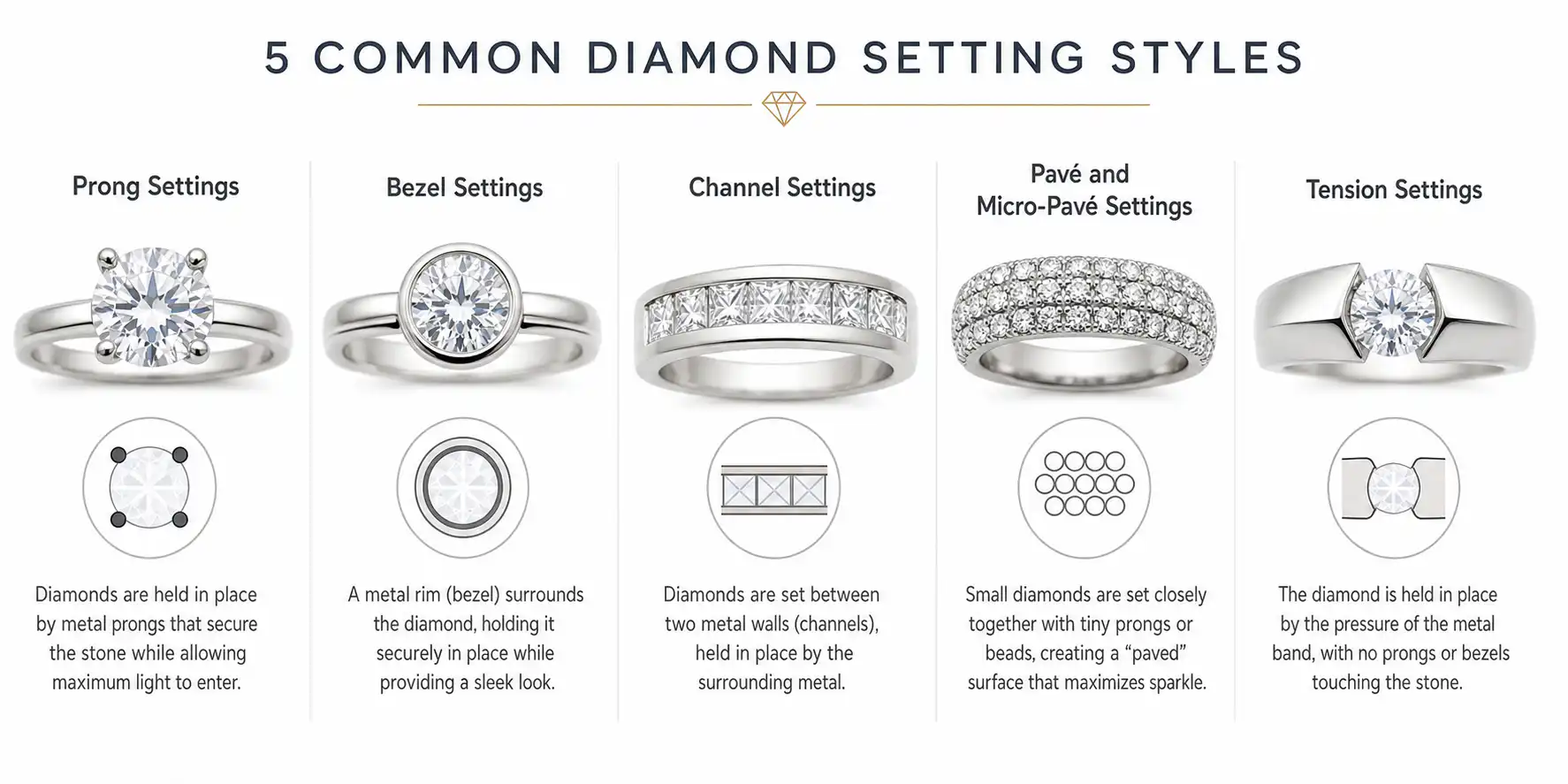
Prong settings must maintain adequate tension to retain stones during vibration. Worn tips, bent prongs, or damaged settings may release stones during processing. Four-prong and six-prong settings in good condition generally retain stones securely.
Bezel settings completely surrounding stone perimeters typically demonstrate excellent security. The continuous metal band provides superior retention, though gaps allow solution accumulation behind stones.
Pavé settings present variable compatibility. Quality work with properly set stones survives processing, while inferior setting or wear may shed stones. Channel settings prove safe when construction quality remains high.
Diamond setting methods
Glued or Bonded Components
Jewelry incorporating adhesives demonstrates poor compatibility regardless of materials. Cavitation combined with solution penetration progressively weakens joints. Multiple cycles accelerate deterioration.
Doublet and triplet gemstones relying on cement or epoxy routinely separate during processing. Opal doublets, garnet-topped doublets, and assembled emeralds face particular risk.
Costume jewelry frequently employs adhesive bonding for rhinestones and decorative elements. These constructions prove universally unsuitable for ultrasonic cleaning.
Jewelry Types Best Suited for Ultrasonic Cleaning
Specific categories demonstrate consistent compatibility:
- Wedding bands and engagement rings with diamonds in quality settings represent ideal candidates. Durable metals, hard stones, and secure settings tolerate unlimited processing.
- Diamond stud earrings with secure posts clean excellently. Simple construction eliminates complications, while diamond durability ensures safety.
- Gold and platinum chains benefit tremendously due to numerous links and complex geometry. Cavitation penetrates throughout structure, removing accumulated contamination manual methods cannot reach.
- Modern stainless steel fashion jewelry with cubic zirconia offers compatibility at accessible prices. Durable materials throughout avoid problematic gems or weak bonding.
- Signet rings fabricated from solid precious metals clean safely. Substantial construction provides durability, while engraved details benefit from cavitation reaching recessed areas.
Items Never to Clean Ultrasonically
Certain categories demonstrate universal incompatibility:
- Pearl jewelry in all forms requires complete exclusion. Damage to nacre occurs rapidly and irreversibly, destroying lustrous surfaces permanently.
- Watches should never undergo processing while assembled. Cavitation drives solution past seals into movements, causing corrosion and lubrication contamination.
- Costume jewelry with glued components routinely loses rhinestones and decorative elements as cavitation weakens adhesive bonds.
- Treated gemstones including clarity-enhanced diamonds, fracture-filled rubies, and dyed stones risk losing enhancement materials during processing.
- Emerald jewelry regardless of quality requires alternative cleaning methods due to characteristic inclusions and brittleness.
Proper Operating Parameters
Matching settings to jewelry characteristics maximizes effectiveness while minimizing risks.
Duration: Most compatible jewelry cleans adequately in three to five minutes. Diamond, ruby, and sapphire jewelry tolerates this standard interval. Gold chains without gemstones can process up to eight minutes when heavily contaminated. Mixed-material pieces should follow guidelines for the most vulnerable compatible component.
Temperature: Room temperature at 20 to 25 degrees Celsius provides adequate performance for routine maintenance. Heated solutions between 40 and 50 degrees offer improved cleaning for heavy contamination. Avoid temperatures above 60 degrees, which create unnecessary risks without proportional benefits.
Solutions: Ammonia-free jewelry cleaning solutions formulated for ultrasonic use provide optimal performance. Mild dish soap with a few drops in plain water serves adequately for routine cleaning. pH-neutral solutions prevent chemical attack on sensitive materials. Specialized silver solutions combine ultrasonic action with chemical tarnish reduction.
Pre-Cleaning Inspection
Systematic examination before processing identifies potential problems:
- Visual inspection under 10x magnification reveals existing damage, loose stones, or worn settings that might worsen during exposure.
- Setting security testing through gentle manipulation identifies loose stones before processing. Any perceptible movement indicates repair needs.
- Material identification ensures all components tolerate ultrasonic exposure. When uncertain about gemstone identity or treatments, conservative approaches prevent damage.
- Documentation through photography establishes baseline condition before cleaning, proving valuable if damage occurs.
Alternative Cleaning Methods
Jewelry unsuitable for ultrasonic processing benefits from alternatives:
- Soft cloth cleaning using microfiber removes surface contamination without damage risks, suiting fragile materials and organic gemstones.
- Mild soap and water with soft brush scrubbing cleans detailed jewelry safely. Use soft natural or synthetic bristles over a bowl with closed drain.
- Steam cleaning provides intensive action for some incompatible pieces, though thermal shock risks require careful assessment.
- Specialized products designed for specific materials offer targeted performance. Pearl cleaners, silver solutions, and gemstone-specific products provide optimized chemistry.
- Professional hand cleaning delivers superior results for valuable or problematic jewelry through expertise, specialized tools, and appropriate solutions.