 Granbo Ultrasonic









The Real Lifespan of Ultrasonic Cleaners: What to Expect
Browse Volume:65 Classify:Support
Ultrasonic cleaners have become essential tools in homes, jewelry stores, dental offices, and industrial facilities worldwide. These devices promise efficient cleaning through high-frequency sound waves, but potential buyers and current owners often wonder about their operational lifespan. Understanding how long these machines last helps you make informed purchasing decisions and maximize your investment through proper care.
The lifespan of an ultrasonic cleaner varies dramatically based on construction quality, usage intensity, and maintenance practices. A budget consumer model might serve reliably for two years with occasional use, while a professional unit can operate daily for a decade or more. The difference lies not just in initial quality but in how well the device matches its intended application and receives appropriate care.
Market research and user reports reveal significant lifespan variations that often surprise new buyers. Many attractive-looking consumer models fail within months of regular use, while plain industrial units continue operating reliably after years of demanding service. Learning what factors truly determine longevity helps you choose wisely and care for your equipment effectively.
Understanding Ultrasonic Cleaner Longevity
Several interconnected factors determine how long an ultrasonic cleaner operates reliably. Build quality represents the most fundamental factor. Manufacturers make critical choices about materials, component quality, and assembly methods that profoundly impact durability.
The transducer quality and mounting method critically influence lifespan. This component converts electrical energy into ultrasonic vibrations. High-quality transducers use robust piezoelectric materials properly bonded to the tank bottom. Budget models may use inferior adhesives or inadequate transducer sizing that leads to premature failure.
Tank construction and material selection affect both performance and longevity. Stainless steel tanks resist corrosion and handle temperature cycling better than plastic alternatives. The steel grade matters significantly, with 304 stainless steel offering good durability and 316 stainless steel providing superior corrosion resistance for demanding applications.
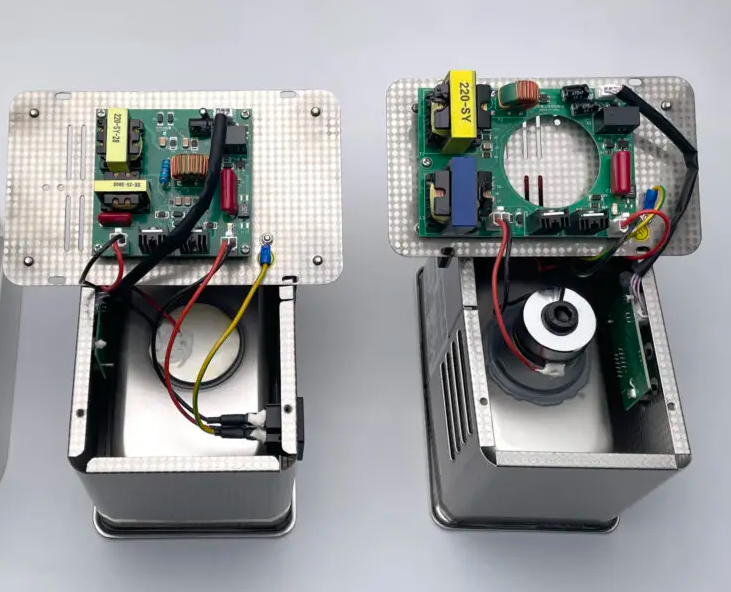
Internal structure comparison of two ultrasonic cleaners with different power
Electrical components including circuit boards, heating elements, and switches vary tremendously in quality. Premium units incorporate commercial-grade components designed for extended operation and repeated cycling. Budget models often use consumer-grade parts that fail faster under regular use.
Consumer ultrasonic cleaners target home users and light commercial applications. These units emphasize affordability, compact size, and ease of use. Consumer models typically specify duty cycles limiting continuous operation, often 15 to 20 minutes followed by a cooling period. Exceeding these limits causes overheating that accelerates component degradation.
Industrial ultrasonic cleaners serve demanding commercial and manufacturing environments. These units feature robust construction, oversized components, and continuous duty ratings. Industrial cleaners cost significantly more but justify the investment through extended lifespan and reliable performance under heavy use. The transducer configuration differs substantially, with industrial units incorporating multiple larger transducers providing redundancy and better power distribution.
Average Lifespan by Quality Tier
Budget Models Under $100
Budget ultrasonic cleaners typically cost between $30 and $100, making them accessible for casual home use. However, significant quality disparities exist in this price range, particularly between plastic-housing and stainless steel-body models, leading to vastly different lifespan expectations.
Plastic Housing Models: Inconsistent Quality
Plastic housing ultrasonic cleaners present several inherent limitations that affect their longevity and performance. These models lack adequate heat resistance and are prone to warping under sustained ultrasonic vibration. The plastic materials don’t conduct sound waves as efficiently as metal, leading to poor cavitation distribution and reduced cleaning effectiveness.
Plastic housings show highly inconsistent quality across different suppliers and price points. Many common ultrasonic cleaning solutions, especially stronger alkaline or acidic formulations, can degrade, cloud, or even dissolve certain plastics over time. Plastics generally cannot handle high temperatures without deforming, limiting the operational temperature range.
Testing reveals that plastic-housing units used weekly for jewelry cleaning typically last only 6 to 12 months before developing problems. Those used daily fail even faster, sometimes within 3 to 6 months. The most common failure modes include:
- Transducer bond failure: Budget plastic units use minimal adhesive bonding the transducer to the tank bottom. Thermal shock—where users replace hot water with cold—frequently causes the bond between the piezoelectric element and tank to break.
- Heat-related deformation: Continuous heating cycles cause plastic tanks to warp, affecting ultrasonic transmission and eventually leading to leaks.
- Chemical degradation: Exposure to cleaning solutions accelerates material breakdown, particularly in lower-grade plastics.
- Heating element failures: These models often use undersized heating elements that run excessively hot to reach target temperatures quickly, shortening component life significantly.
Stainless Steel Housing Models: Superior Consistency
In contrast, stainless steel-body budget models demonstrate substantially more unified quality standards across suppliers. Stainless steel offers multiple advantages that directly translate to extended lifespan:
- Corrosion resistance: Highly resistant to water and most cleaning solutions, preventing degradation over time
- Heat tolerance: Withstands high temperatures without deformation, allowing safe heated operation
- Ultrasonic transmission: Excellent sound wave conductivity ensures efficient cavitation and consistent cleaning performance
- Structural stability: Won’t degrade with heat and vibrations, maintaining tank integrity throughout service life
- Chemical compatibility: Compatible with a wide range of cleaning solutions without material degradation
Stainless steel-body budget models typically last 18 months to 3 years with regular use—representing a 2-3x improvement in lifespan over plastic-housing equivalents at similar price points. This extended durability often makes stainless steel models more cost-effective despite slightly higher initial prices.
Some stainless steel budget models exceed these expectations. Occasional users report units lasting 3 to 5 years with light use, perhaps monthly jewelry cleaning. The key factors appear to be:
- Respecting duty cycle limitations (typically 15-20 minutes of operation followed by equal cooling time)
- Allowing adequate cooling between sessions
- Using appropriate cleaning solutions
- Regular maintenance and cleaning
While budget stainless steel models may seem slightly more expensive initially, their 2-3x longer lifespan and more predictable performance make them considerably more economical for most users.
Mid-Range Consumer Units
Mid-range ultrasonic cleaners priced between $100 and $500 offer improved construction and longer expected lifespans. These units target serious home users and light commercial applications. Better components and construction justify the higher price through extended service life.
Typical lifespans for quality mid-range units range from 3 to 5 years with regular use. These models are ideal for small businesses and frequent users who require reliable performance. These cleaners handle weekly operation reliably and tolerate occasional heavier use. Proper maintenance and care extends lifespan toward the upper end of this range.
Enhanced Component Quality
Mid-range units incorporate better transducers with improved bonding methods. The transducers themselves use higher-quality piezoelectric materials that resist degradation. Better thermal management reduces stress on transducers during operation, extending their functional life.
Tank construction quality improves noticeably in mid-range units. Most feature high-quality 304 stainless steel tanks that ensure durability while delivering consistent cleaning results. Thicker stainless steel resists warping and provides better ultrasonic transmission. Improved welding and sealing techniques prevent the leaks that plague some budget models.
Heating elements in mid-range units are properly sized for their capacity, preventing the overheating issues common in budget models. Digital controls offer more precise temperature and timer settings, reducing thermal stress on components.
Professional and Industrial Grade Cleaners
Professional ultrasonic cleaners priced between $500 and $2,000 serve commercial applications requiring reliability. Expected lifespans for professional units range from 5 to 10 years with daily commercial use. With proper use and maintenance, quality professional cleaners can deliver reliable service throughout this period.
Professional-Grade Construction
Professional units use multiple transducers providing better cleaning distribution throughout the tank. Larger tanks incorporate multiple transducer modules distributed across the tank bottom to ensure more even cleaning coverage. This configuration delivers more uniform cleaning results across the entire tank volume.
Advanced thermal management systems prevent the overheating that limits consumer model lifespans. Oversized heating elements operate well below their maximum capacity, significantly extending their service life. Superior insulation maintains temperature while reducing energy consumption.
Industrial Systems: Built for Decades
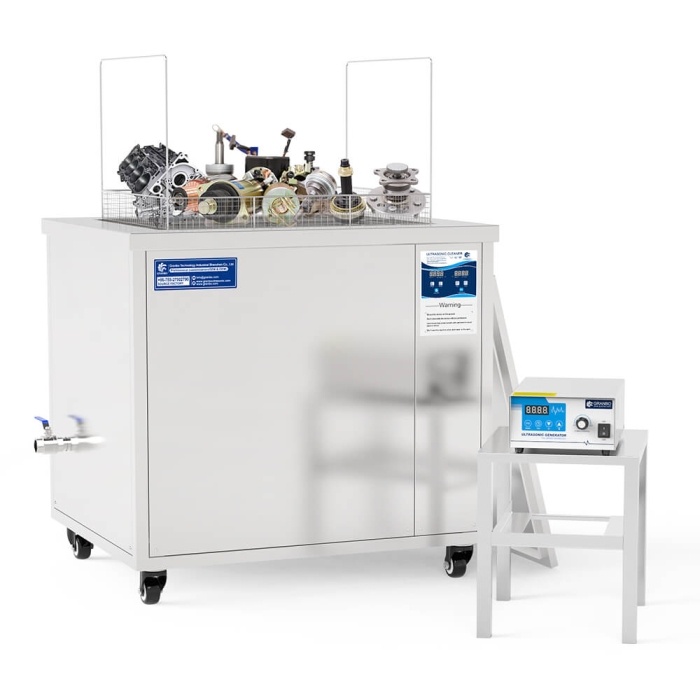
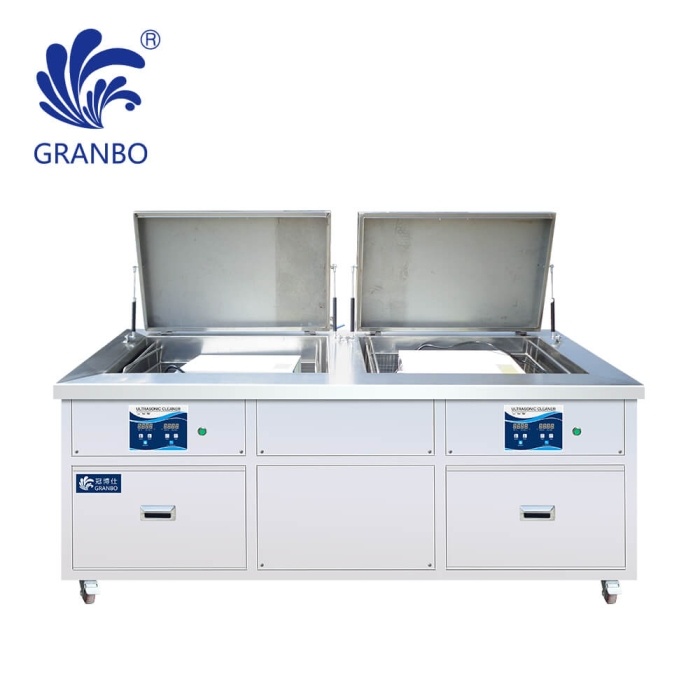
Industrial ultrasonic cleaning systems serve manufacturing, aerospace, medical device production, and other demanding applications. These systems cost from $2,000 to over $50,000 depending on size and features. Quality industrial systems operate reliably for 8 years or more with proper maintenance and regular servicing.
Industrial-grade cleaners utilize premium materials including 316 stainless steel, offering superior corrosion resistance essential for long-term durability in harsh chemical environments. This marine-grade stainless steel withstands aggressive cleaning solutions and extreme operating conditions.
Industrial systems feature massive transducer arrays providing tremendous cleaning power. Multiple transducer modules are distributed strategically to ensure uniform cleaning throughout large tank volumes. Heating systems use heavy-duty elements with substantial overcapacity, ensuring elements never operate near their limits. Tank construction employs heavy stainless steel plate, often 316 grade with specialized finishes for specific applications.
Advanced filtration systems, automated chemical dosing, and sophisticated controls characterize high-end industrial systems. These features not only improve cleaning performance but also extend equipment life by maintaining optimal operating conditions and reducing component stress. Industrial generators are designed for continuous operation and can reliably power systems in harsh conditions.
The construction quality, component redundancy, and robust design of industrial systems justify their higher cost through extended reliable operation and minimal downtime—critical factors in production environments where cleaning system failures can halt entire manufacturing lines.
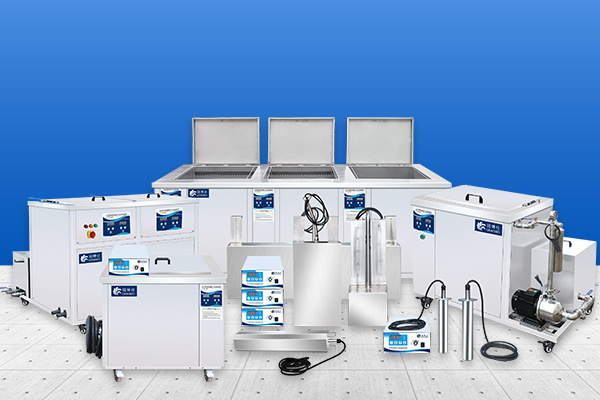
Industrial Ultrasonic Cleaner
Components That Fail First
Transducer Degradation
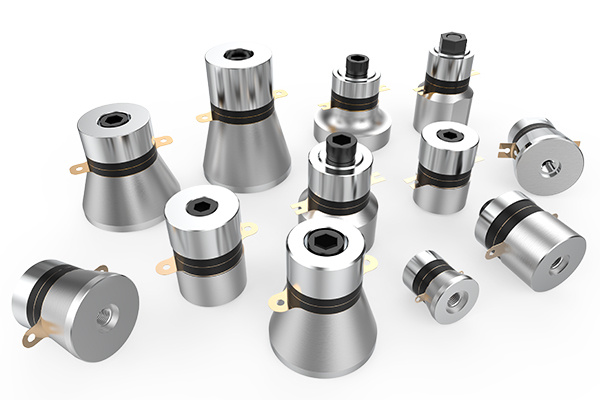
Transducers
Transducers represent the heart of ultrasonic cleaners and typically determine functional lifespan. These piezoelectric devices convert electrical signals into mechanical vibrations creating the ultrasonic waves.
Piezoelectric material fatigue occurs gradually through millions of vibration cycles. The crystalline structure develops microfractures that reduce efficiency. This degradation happens slowly in quality transducers, taking years to significantly impact performance. Budget transducers using inferior materials deteriorate faster.
The bond between transducer and tank proves critically important for longevity. Manufacturers use specialized adhesives or brazing to attach transducers. Quality bonds withstand temperature cycling and vibration stress for years. Poor bonds fail within months, causing reduced output or complete transducer failure.
Thermal stress accelerates transducer degradation significantly. Each heating and cooling cycle causes expansion and contraction. The differential expansion between transducer materials and tank creates stress at the bond interface. Frequent temperature cycling or rapid temperature changes increase stress and shorten transducer life.
Heating Element Failures
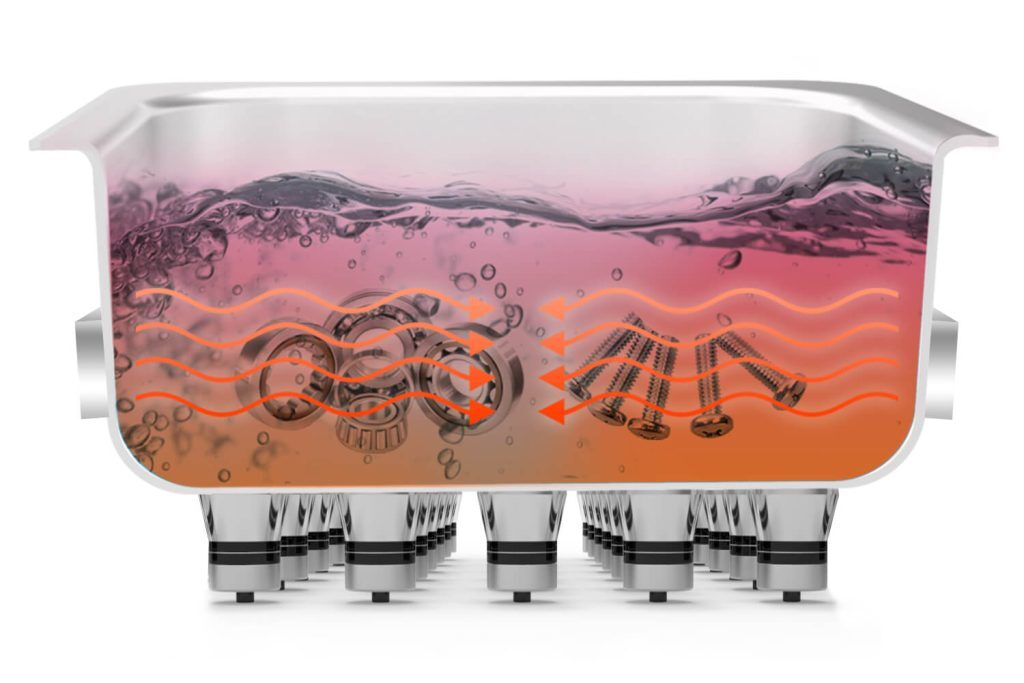
heated
Heating elements represent another common failure point in ultrasonic cleaners. These components endure significant stress from repeated heating cycles and chemical exposure.
Thermal cycling creates expansion and contraction that eventually crack heating elements. Each heat-cool cycle produces mechanical stress in element materials. Quality elements use materials and designs that withstand thousands of cycles. Budget elements may fail after hundreds of cycles.
Corrosion attacks heating elements exposed to aggressive cleaning solutions. Protective coatings or encapsulation extend element life by preventing chemical contact. Damaged protective layers allow corrosive solutions to attack element materials, causing failure.
Scale buildup from hard water reduces heating efficiency and causes localized overheating. Mineral deposits insulate element surfaces, forcing elements to run hotter to achieve target temperatures. This increased operating temperature accelerates failure. Regular descaling prevents this failure mode.
Control System Issues
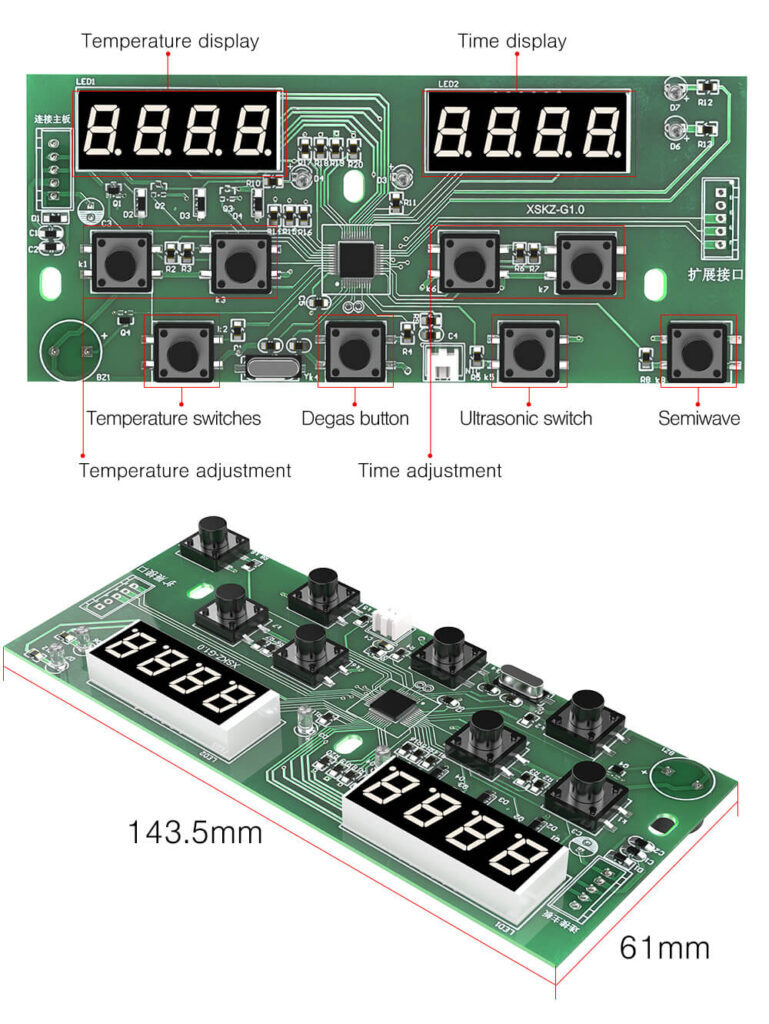
Control System Issues
Electronic controls and timers experience failures from electrical stress, environmental factors, and component aging. These systems use sensitive electronics vulnerable to moisture, temperature extremes, and power surges.
Switch failures represent common control system problems. Mechanical switches wear from repeated use, developing poor contacts or complete failures. Cheap switches fail quickly with regular use. Quality switches withstand hundreds of thousands of cycles.
Circuit board failures result from various causes including poor soldering, component failures, and environmental damage. Moisture penetration into electronic enclosures causes corrosion and shorts. Inadequate ventilation allows heat buildup damaging sensitive components.
Usage Patterns That Impact Longevity
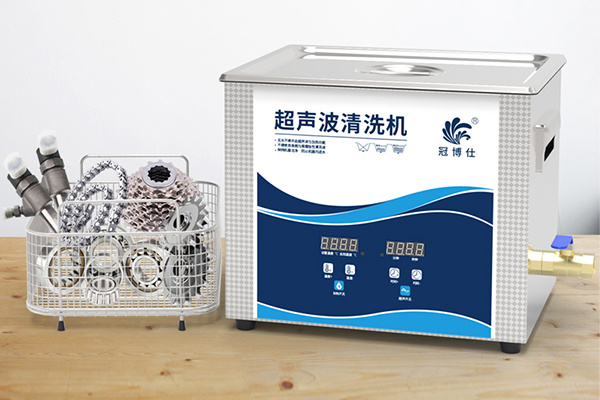
Granbo Ultrasonic Cleaner
Usage Frequency
Operating frequency significantly impacts ultrasonic cleaner lifespan. Daily operation stresses components more than occasional use, but the relationship between frequency and longevity isn’t simply linear.
Consumer units designed for intermittent operation experience accelerated wear when run continuously. These cleaners require cooling periods between sessions, typically equal to or longer than operating time. Running a consumer unit continuously throughout the day causes overheating that rapidly degrades components.
Weekly use extends lifespan dramatically compared to daily use for consumer models. A mid-range consumer cleaner lasting 3 years with weekly use might fail within 12 months of daily operation. This difference stems from accumulated thermal stress, transducer fatigue, and heating element degradation.
Professional and industrial units are engineered for more frequent operation. These models incorporate enhanced cooling systems, more robust transducers, and oversized heating elements that tolerate daily use. However, even professional units benefit from periodic rest periods that allow components to cool completely.
Session Length
Session length directly impacts component stress and longevity. Longer operating sessions generate more heat, cause more vibration cycles, and stress components more than brief sessions. Consumer cleaners typically specify maximum session lengths between 10 and 30 minutes. Exceeding specified limits causes overheating that accelerates component degradation.
Duty Cycle Considerations
Consumer models generally operate on duty cycles—the ratio of operating time to rest time. A typical consumer unit might specify a 50% duty cycle, meaning 15 minutes of operation requires 15 minutes of cooling before the next session. Ignoring duty cycle recommendations leads to:
- Transducer overheating: Continuous vibration generates heat that accumulates without adequate cooling periods
- Heating element failure: Elements operating continuously near maximum capacity fail prematurely
- Seal degradation: Sustained high temperatures accelerate rubber and gasket deterioration
- Tank stress: Repeated thermal expansion without cooling causes microscopic cracks
Professional units feature longer permissible session lengths, often 60 minutes or more, with reduced cooling requirements. Industrial systems designed for continuous operation can run throughout work shifts without rest periods.
Operating Temperature
Operating temperature significantly impacts component longevity and cleaning effectiveness. Higher temperatures improve cleaning performance but increase stress on all components. Heated operation stresses transducers through thermal expansion cycles. The temperature differential between operating temperature and ambient conditions determines stress magnitude.
Comparative testing demonstrates that units operated consistently at maximum temperature (65°C) fail approximately 30% faster than units operated at moderate temperatures (45°C). The difference results primarily from accelerated heating element and seal degradation. High-temperature operation also increases transducer stress through greater thermal expansion.
Temperature-Related Wear Mechanisms
- Seal degradation: Rubber seals and gaskets deteriorate faster at elevated temperatures
- Adhesive weakening: Transducer bonding adhesives soften and degrade with sustained heat
- Metal fatigue: Repeated thermal expansion and contraction cycles cause microscopic structural changes
- Heating element oxidation: Elements operated at higher temperatures oxidize faster
Operating at the minimum effective temperature extends equipment life. Many cleaning applications achieve satisfactory results at 40-50°C rather than maximum temperature settings. Gradual temperature increases allow components to expand gradually, reducing thermal shock.
Cleaning Solution Chemistry
Cleaning solution choice impacts equipment longevity substantially through chemical interactions with components. Aggressive chemicals accelerate corrosion and degrade seals, while gentler solutions minimize component stress.
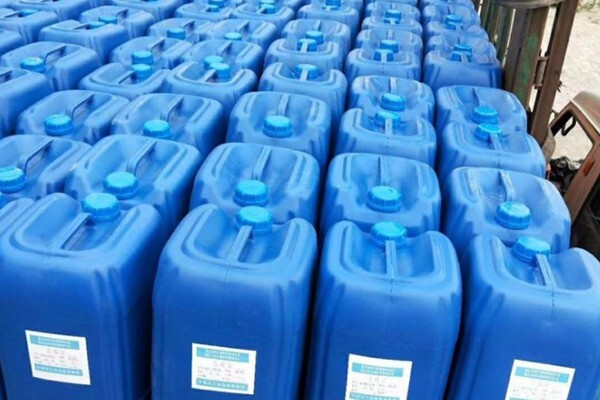
Ultrasonic Cleaning Solutions
Solution Types and Component Impact
Plain water represents the gentlest option, causing minimal component stress. While water alone provides limited cleaning capability, it eliminates chemical corrosion risks entirely. Distilled or deionized water prevents mineral deposits that accumulate with tap water.
Purpose-formulated ultrasonic cleaning solutions provide effective cleaning while minimizing equipment damage. These solutions are pH-balanced and formulated to avoid aggressive chemical attacks on stainless steel, seals, and other components. Most commercial ultrasonic cleaning solutions fall into this category.
Alkaline solutions clean effectively but attack certain metals and seals. Concentrated alkaline cleaners can etch aluminum components and degrade rubber seals over time. Alkaline solutions require dilution according to manufacturer specifications to minimize equipment damage while maintaining cleaning effectiveness.
Acidic solutions pose significant corrosion risks, particularly to stainless steel tanks and heating elements. Even 304 stainless steel, common in consumer and mid-range cleaners, experiences pitting and corrosion with prolonged acid exposure. If acidic solutions prove necessary, minimize concentration and exposure time. Immediate thorough rinsing removes acidic residues that would otherwise continue corroding surfaces.
Chemical Compatibility Guidelines
- Check compatibility: Verify cleaning solution compatibility with tank materials before use
- Follow dilution ratios: Concentrated solutions cause more damage than properly diluted formulations
- Rinse thoroughly: Remove chemical residues after each session to prevent continued exposure
- Limit soak time: Drain solutions promptly rather than leaving them in the tank for extended periods
- Monitor condition: Inspect tanks regularly for discoloration, pitting, or corrosion indicating chemical damage
Solvent-based cleaners require special consideration. Some solvents attack rubber seals, plastic components, and even certain adhesives bonding transducers to tanks. Consult equipment specifications before using solvent-based cleaning solutions.
Maintenance Practices That Extend Life
Proper maintenance significantly extends ultrasonic cleaner lifespan. Regular cleaning prevents buildup that reduces performance and damages components. Establishing maintenance routines preserves your investment and ensures consistent cleaning performance.
Emptying and rinsing the tank after each use prevents solution residue buildup. Dried cleaning solution leaves deposits that accumulate over time. These deposits reduce ultrasonic transmission efficiency and create corrosive environments when fresh solution is added.
Weekly deep cleaning removes accumulated residues from tank surfaces. Fill the tank with clean water and run a cleaning cycle without items. This flushes loosened deposits and cleans the tank interior.
Descaling removes mineral deposits from heating elements and tank surfaces in hard water areas. Calcium and magnesium deposits insulate heating elements, forcing them to work harder and run hotter. Regular descaling with citric acid or commercial descaling solutions maintains heating efficiency and extends element life.
Complete drying before storage prevents corrosion and mold growth. Empty the tank thoroughly and wipe all surfaces dry. Allow air drying for several hours with the lid open ensures complete moisture removal. Storing wet tanks promotes corrosion even on stainless steel.
Immediate rinsing after using aggressive chemicals removes corrosive residues. Thoroughly flush the tank with clean water after acidic or alkaline solutions. This simple step dramatically reduces corrosion risk from chemical carryover.
Warning Signs Your Cleaner Is Failing
Diminishing cleaning performance often provides the first indication of ultrasonic cleaner problems. Items requiring longer cleaning times or showing incomplete cleaning suggest reduced ultrasonic output. Transducer degradation reduces vibration intensity, lengthening required cleaning time.
The foil test provides simple ultrasonic output verification. Suspend aluminum foil vertically in the water-filled tank during operation. Strong ultrasonic output creates visible pitting and holes in the foil within 20 to 30 seconds. Weak or absent damage indicates transducer problems.
Sound and vibration changes often indicate developing problems. Loudness changes, particularly increasing volume, suggest transducer bonding problems. As bonds weaken, transducers vibrate less efficiently, sometimes producing louder sounds. Rattling or buzzing sounds indicate loose components or mounting problems.
Failure to reach target temperature despite extended heating periods indicates heating element problems. Elements lose efficiency as they age and corrode. Severely degraded elements cannot heat solutions adequately regardless of operating time.
Electrical problems range from minor nuisances to serious safety hazards. Complete failure to power on suggests power supply problems, blown fuses, or control system failures. Tripping circuit breakers or GFCI outlets indicates electrical faults. Burning smells during operation signal serious electrical problems requiring immediate attention.
When Repair Makes Sense vs. Replacement
Deciding between repairing and replacing a failing ultrasonic cleaner depends on several factors including repair cost, equipment age, and expected future lifespan.
Repair costs exceeding 50 percent of replacement cost generally favor replacement, particularly for consumer-grade units. Limited additional lifespan after repair makes expensive repairs poor investments. However, professional and industrial cleaners may justify higher repair costs due to superior quality and longer expected lifespan.
Component availability influences repair decisions significantly. Obsolete models lacking replacement parts cannot be repaired regardless of willingness to invest. Age relative to expected lifespan helps guide decisions. A three-year-old consumer cleaner nearing typical lifespan may not justify repair costs. A five-year-old professional unit with expected 15-year lifespan likely warrants repair investment.
Getting maximum value from your ultrasonic cleaner requires matching equipment capability to your needs and maintaining it properly throughout its service life. Buying appropriate quality for intended use prevents premature replacement. Budget models suit occasional home use but fail quickly in daily commercial service.